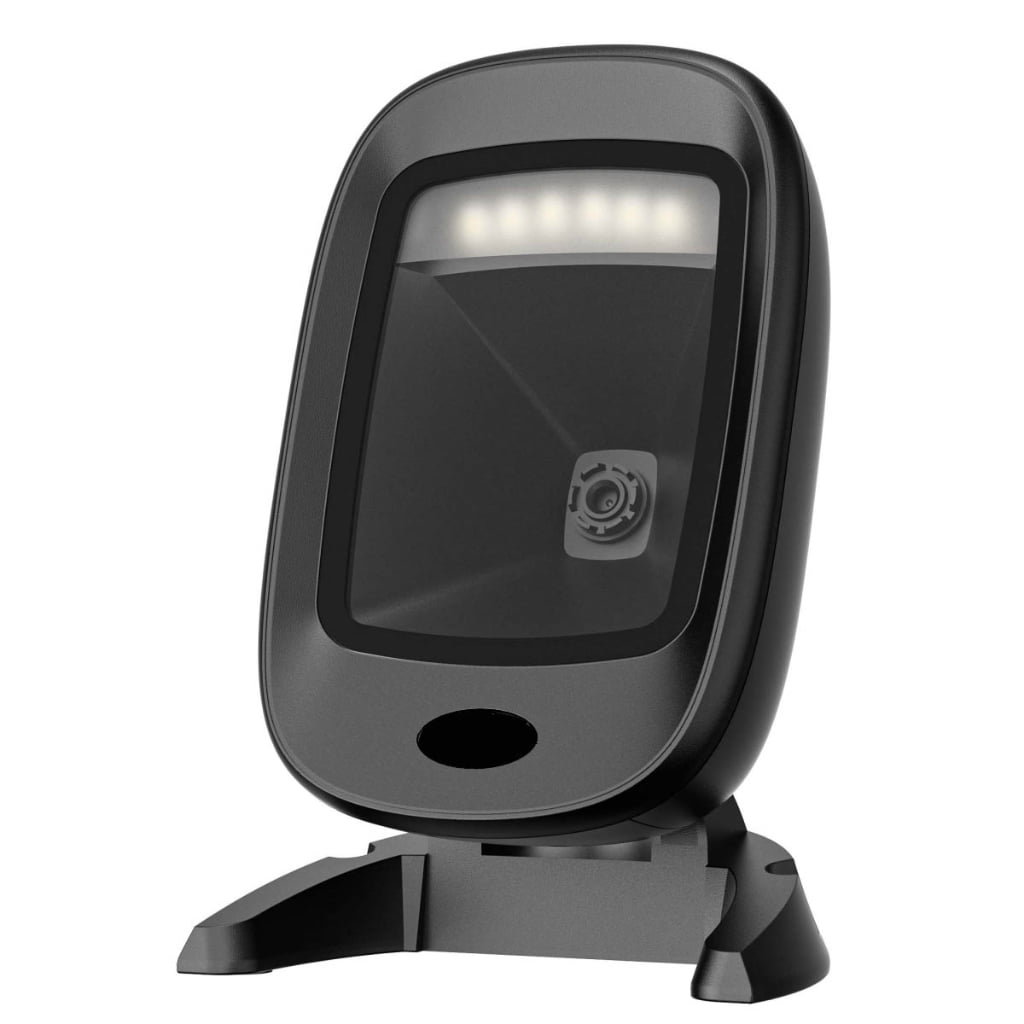
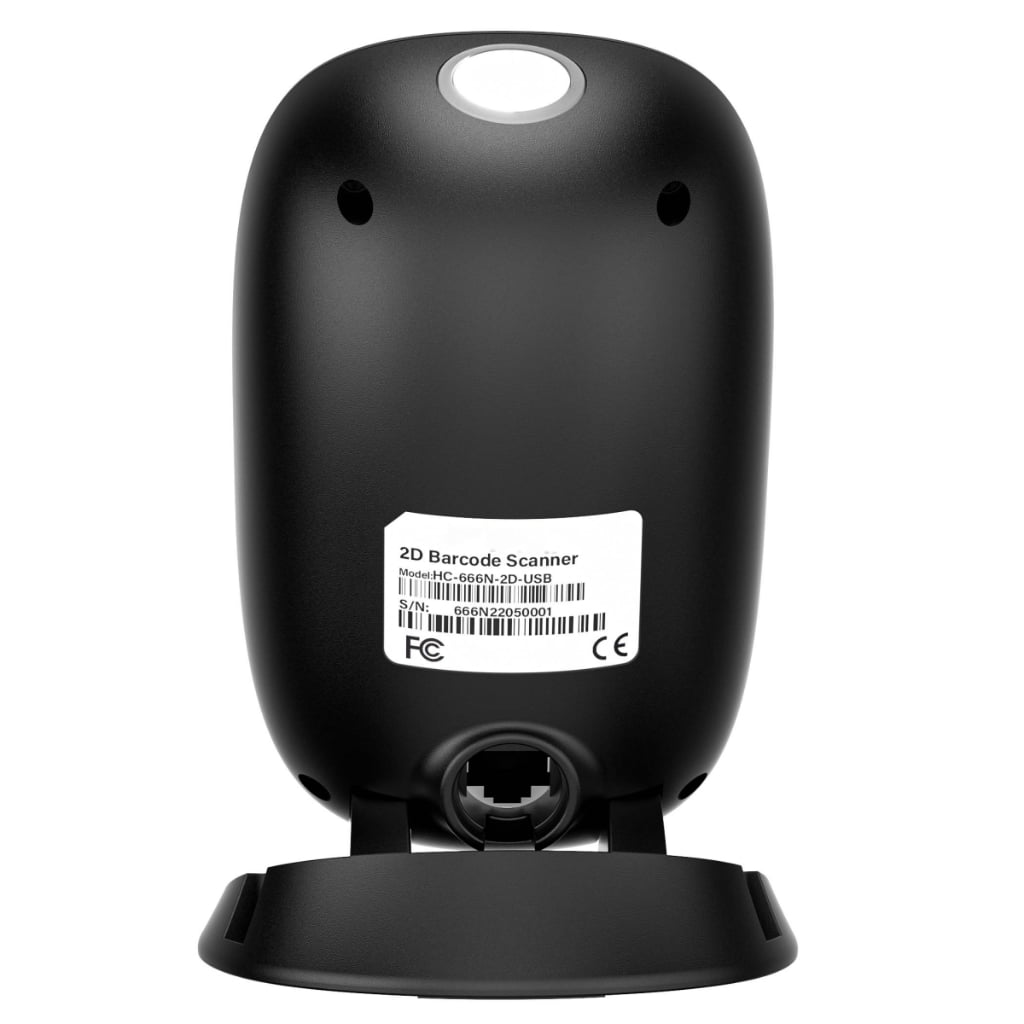
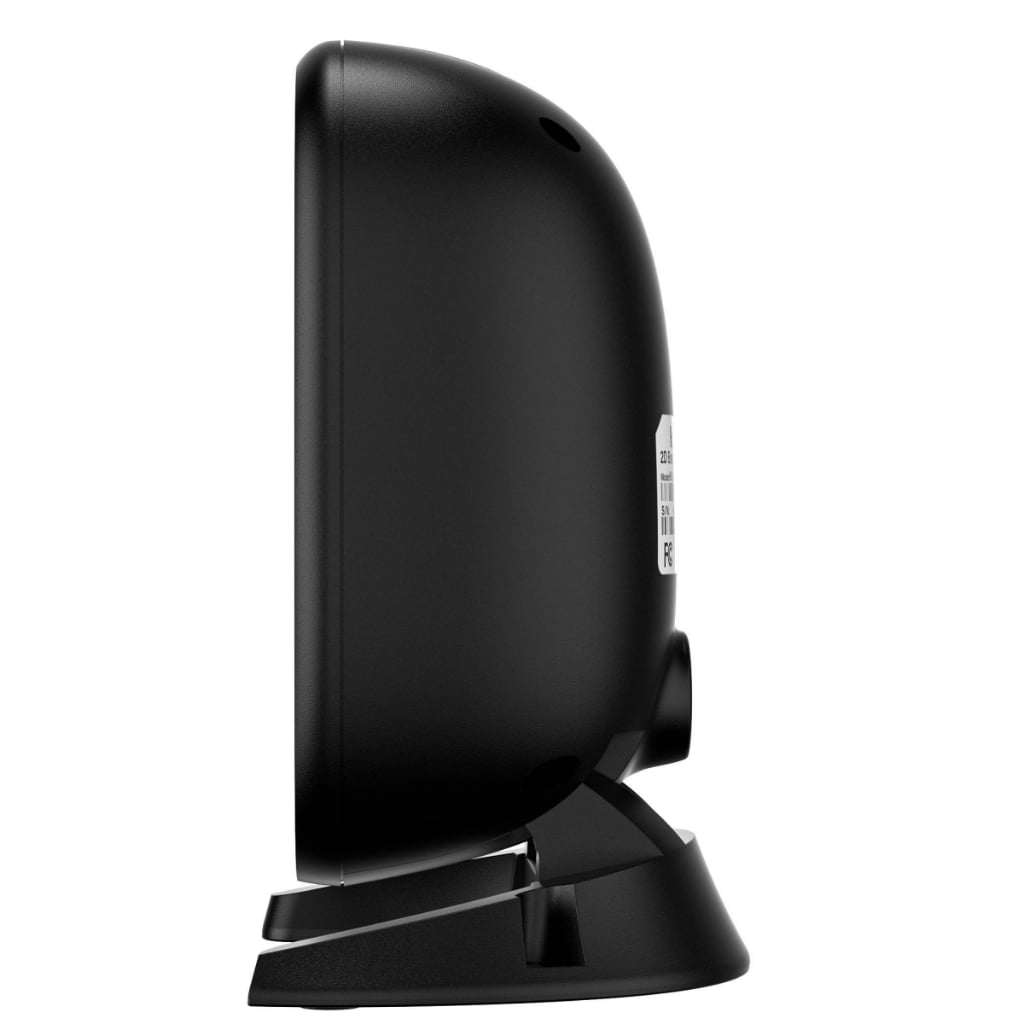
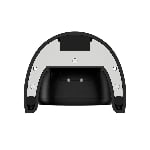
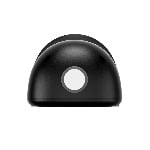
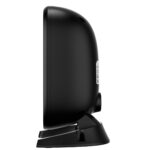
SN-HC666 2D Desktop Barcode Scanner
Retail hardware specified for the work it actually does.
200 g without the cable, a 53 × 41 degree field of view, and presentation mode that decodes continuously so an item placed in front of it reads without a button press. Reads Dotcode alongside QR, Data Matrix and PDF417, and captures the machine-readable zone on identity documents.
- MOQ 1 with 10–15 day lead time on stock models
- Spec sheets and SDK released before the order
- 12-month warranty, OEM branding available on volume orders
- SKU
- SQN-SN-HC666N-2D
- Availability
- In Stock
- Lead Time
- 10-15 business days
- Warranty
- 12 months standard
At 200 g without the cable the SN-HC666 is the lightest reader in this desk family, and that number is not a marketing figure — it is the reason the unit survives being knocked off a counter. A light body carries less momentum into the floor. It is also why the base can be a molded foot rather than a steel plate.
The imager is a 640 × 480 CMOS sensor with a 53 × 41 degree field of view, which is wider than the other readers in the range. A wider field means the code does not have to be centered on the window; it only has to be somewhere in it. On a crowded pharmacy counter where the assistant is holding a box in one hand and a bag in the other, that tolerance is the difference between a read and a re-present.
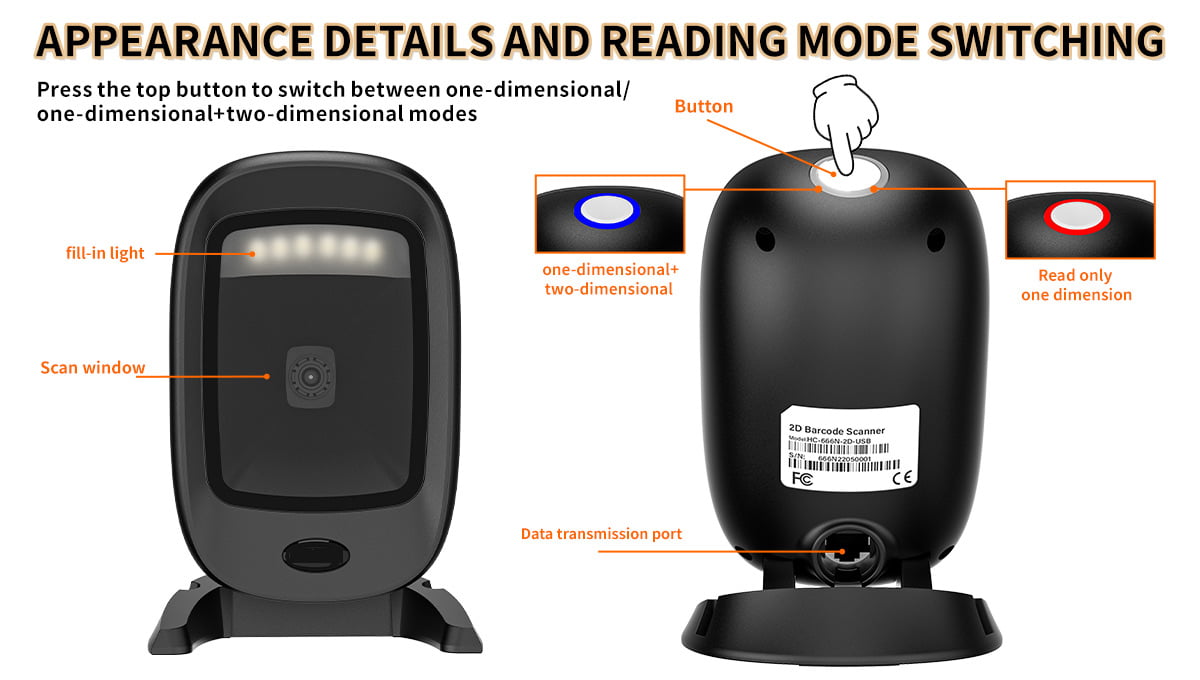
The unit runs in presentation mode by default: it illuminates and decodes continuously, so an item placed in front of it is read without pressing anything. That behavior is what makes it usable at a payment desk where nobody has a free hand.
Core specifications
| Imager | CMOS, 640 × 480 pixels |
|---|---|
| Frame rate | 30 fps |
| Field of view | ≥ 53° horizontal, ≥ 41° vertical |
| Scan angle | ±60° left/right, ±65° front/rear, 360° rotation |
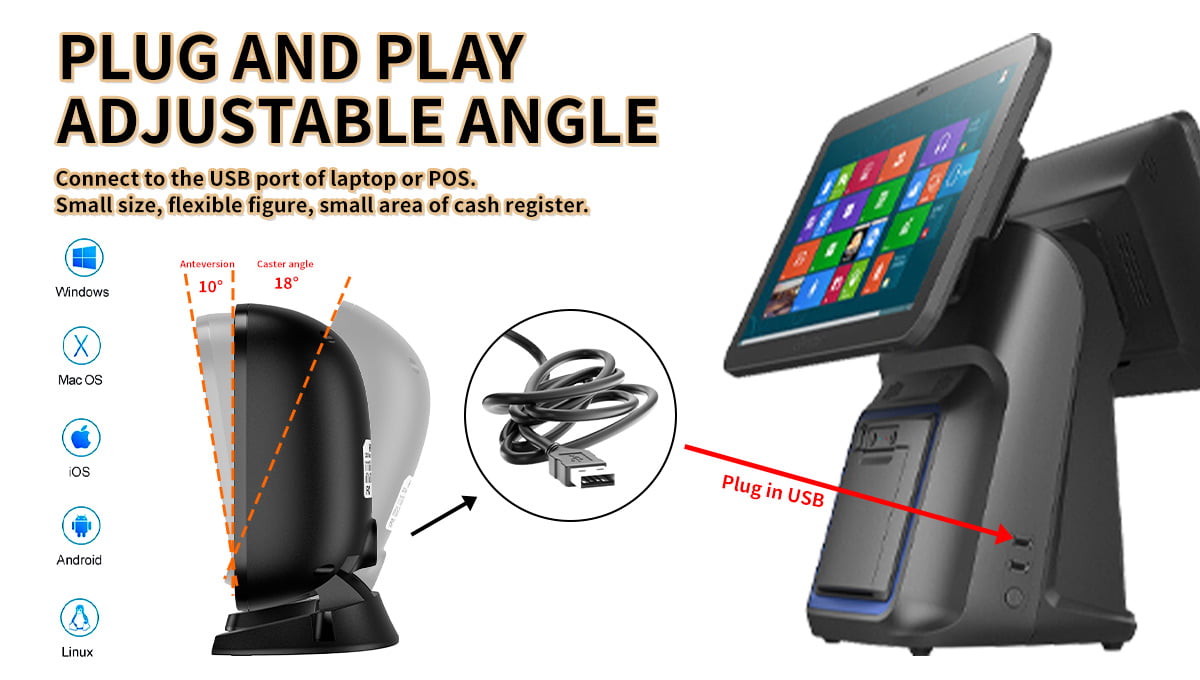
| Body angles | 10° anteversion, 18° caster |
| Motion tolerance | 2 m/s maximum |
| Minimum element | ≥ 4 mil (Code 39) |
| Print contrast | ≥ 20% |
Depth of field
| EAN-13, 13 mil | 0–160 mm at PCS 100% |
|---|---|
| QR Code, 20 mil | 0–150 mm at PCS 100% |
Both ranges are quoted at 100% print contrast rather than 90%, which is why the number is shorter than on a comparable reader. In real use, a thermal label printed on a warm printer at 20% contrast will not reach 160 mm — it will read comfortably in the 60–100 mm band. Quote the specification to your customer, then set expectations with the 100 mm figure.
Symbologies
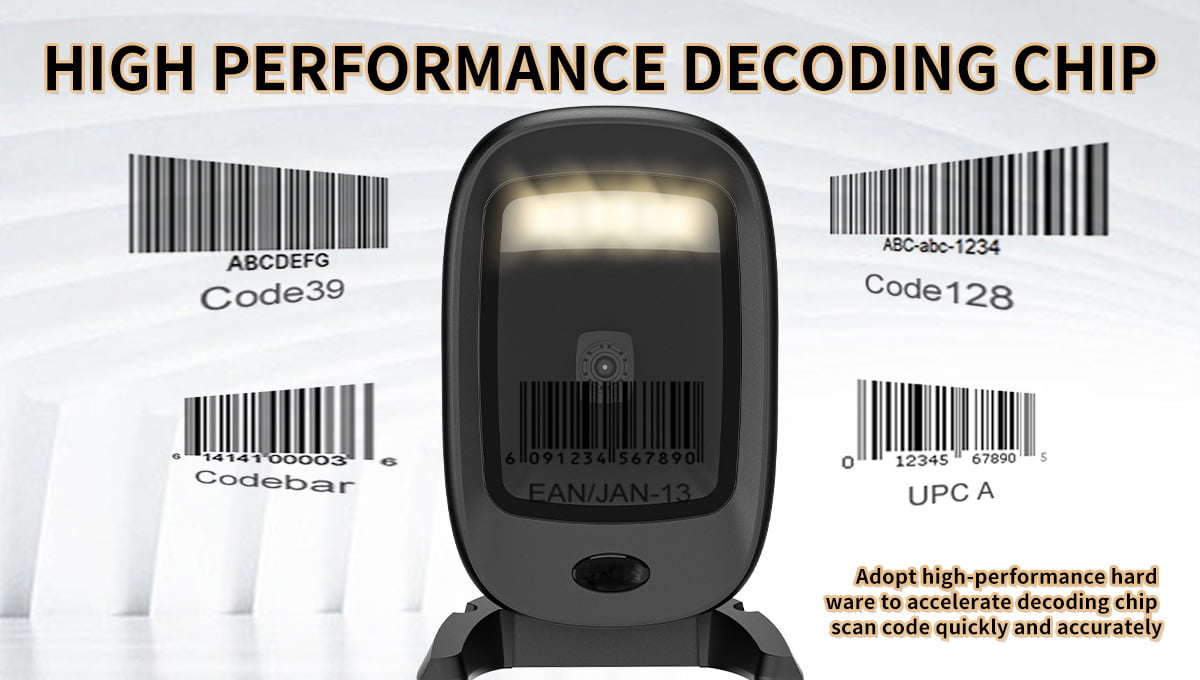
1D: UPC-A, UPC-E, EAN-8, EAN-13, JAN-8, JAN-13, ISBN, ISSN, Code 39 (full ASCII), Codabar (NW7), Code 128, EAN-128, Code 93, Interleaved 2 of 5, Addendum 2 of 5, IATA Code, MSI/Plessey, China Postal Code, Code 32 (Italian Pharmacode), RSS-14, RSS-Limited, RSS-Expand.
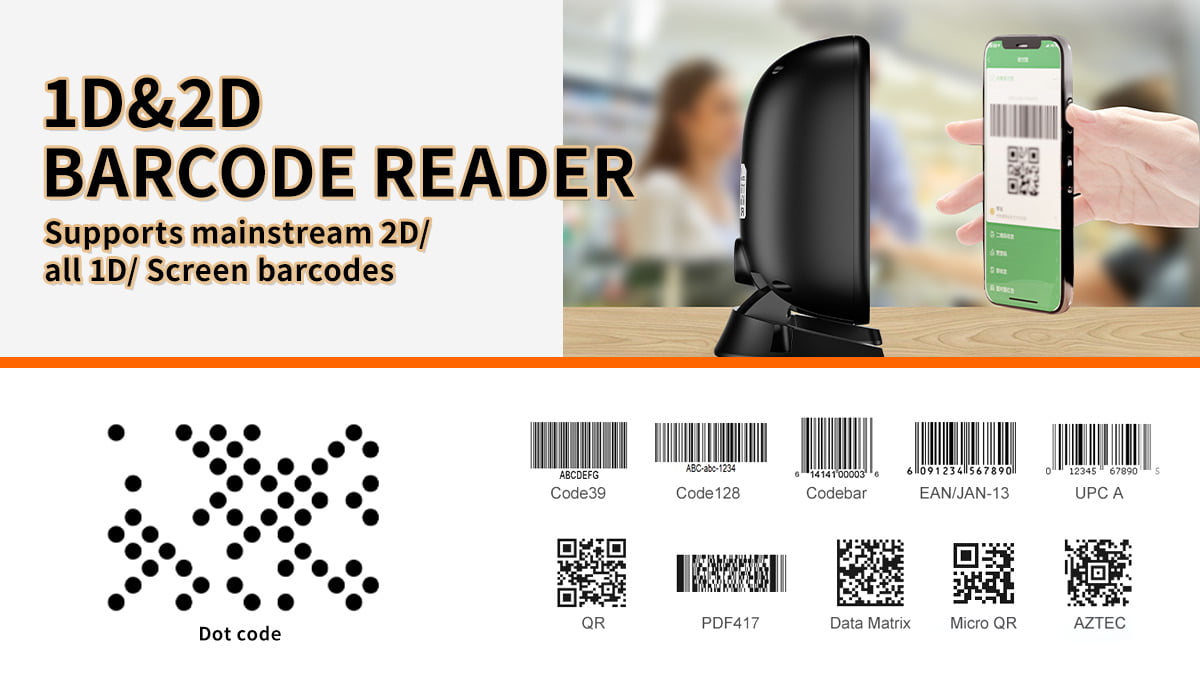
2D: QR Code, PDF417, Data Matrix, Aztec, MaxiCode, Dotcode, GS1 DataBar Stacked.
Dotcode is the unusual entry here. It is a sparse dot-matrix symbology used on high-speed production lines and on some tobacco and pharmaceutical tax stamps, where a conventional printed bar would not survive the process. Most general-purpose readers at this level skip it. If your account prints Dotcode, very little else in this class will read it.
Optical character recognition
Beyond barcodes, the reader can extract the machine-readable zone on Chinese resident identity cards and on several overseas national identity and travel documents. This is character recognition, not barcode decoding, so it is slower and more sensitive to lighting: a laminated card held flat under the window reads in well under a second, while a card at an angle or with a reflective laminate may need to be re-presented.
If identity capture is the primary requirement rather than an occasional convenience, say so before ordering — there are document-specific readers with controlled illumination that do the job more consistently than a general desk reader.
Presentation mode in practice
The reader decodes continuously and applies a duplicate-read window, so an item left under the sensor does not flood the POS with repeats. The window is configurable by barcode from the manual. Two things are worth knowing:
- Ambient light does not trigger a decode — the sensor looks for code structure, not brightness, so a white receipt under the window is ignored.
- The buzzer and LED confirm independently of the host, so a cashier knows a read succeeded even if the application is still processing.
Physical and electrical
| Dimensions | 100 × 82 × 150 mm (L × W × H) |
|---|---|
| Weight | 200 g without cable |
| Housing | ABS + PC |
| Input voltage | 5 VDC ±5% |
| Operating current | 190 mA typical |
| Standby current | 90 mA |
| Cable | 1.8 m straight |
| Light source | Warm white 3500 K LED |
Standby draw of 90 mA is high for a mains-powered device and irrelevant in that context — it only becomes a consideration if the reader is running from a battery-backed terminal, where the 100 mA gap between idle and active is worth accounting for in the runtime estimate.
Environment
Operating −20 °C to +60 °C, storage −40 °C to +70 °C, 5–95% relative humidity non-condensing, 2 m drop resistance, IP52, ESD ±8 kV direct discharge, ambient light 0–100,000 lux.
The 2 m drop rating assumes a hard floor, not tile over concrete with a gap underneath. Counter drops are what the rating is for; being thrown across a stockroom is not.
Interfaces
USB HID keyboard, USB virtual serial port, or RS-232, all from the same enclosure and selected by configuration barcode. Windows, iOS and Android hosts are supported. The USB variants take power from the host at 190 mA, well inside a standard port's budget.
Where it earns its place
- Pharmacy and clinic counters. Two code types in one pass — the retail EAN and the Data Matrix used for batch recall — plus identity capture at a window.
- Small convenience stores. The 100 mm depth leaves the counter usable, and 200 g means a knock does not end the shift.
- Franchise and payment desks. Presentation mode suits a counter where the operator has one hand occupied.
- Production and tax-stamp lines. Dotcode support is the reason to choose this model over its siblings.
What it will not do
No cordless operation. No Bluetooth. It reads at presentation range only, so it is the wrong choice for reading a label on a shelf two meters away. And the OCR capability covers identity documents; it will not read a handwritten invoice or a printed address block.
Compliance and ordering
CE to EN 55032:2015 and EN 55035:2017, EN 62368-1:2014+A11:2017, RoHS, BIS and FCC Part 15 Class B. SKU SN-HC666, interface specified at order. 1.8 m cable included, MOQ 1, 10–15 days standard, OEM branding from 50 units.
Product images
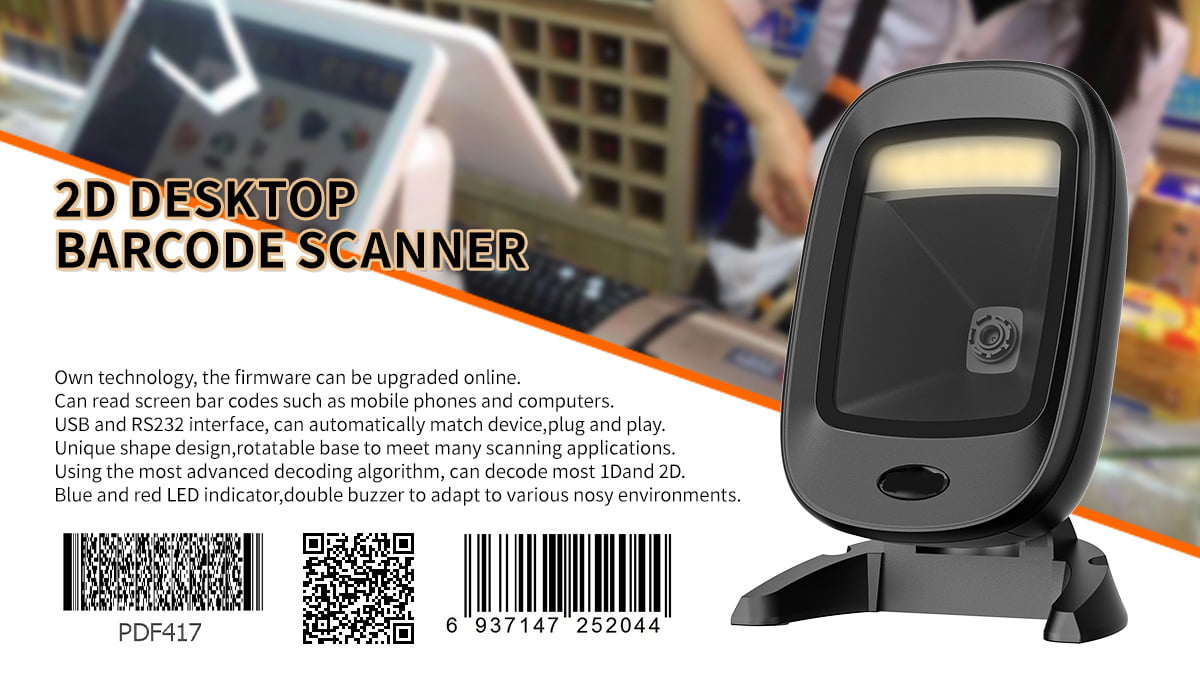
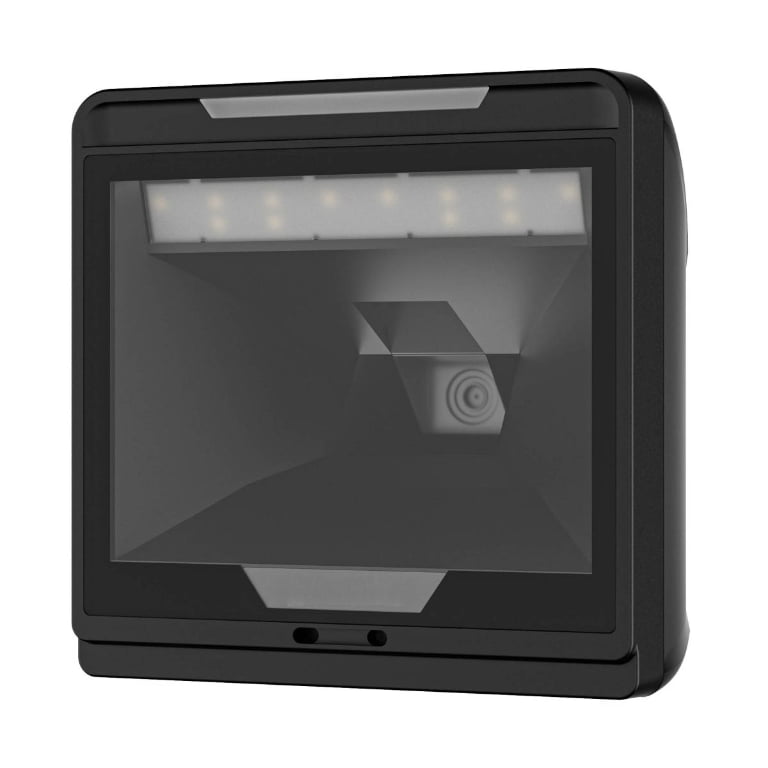
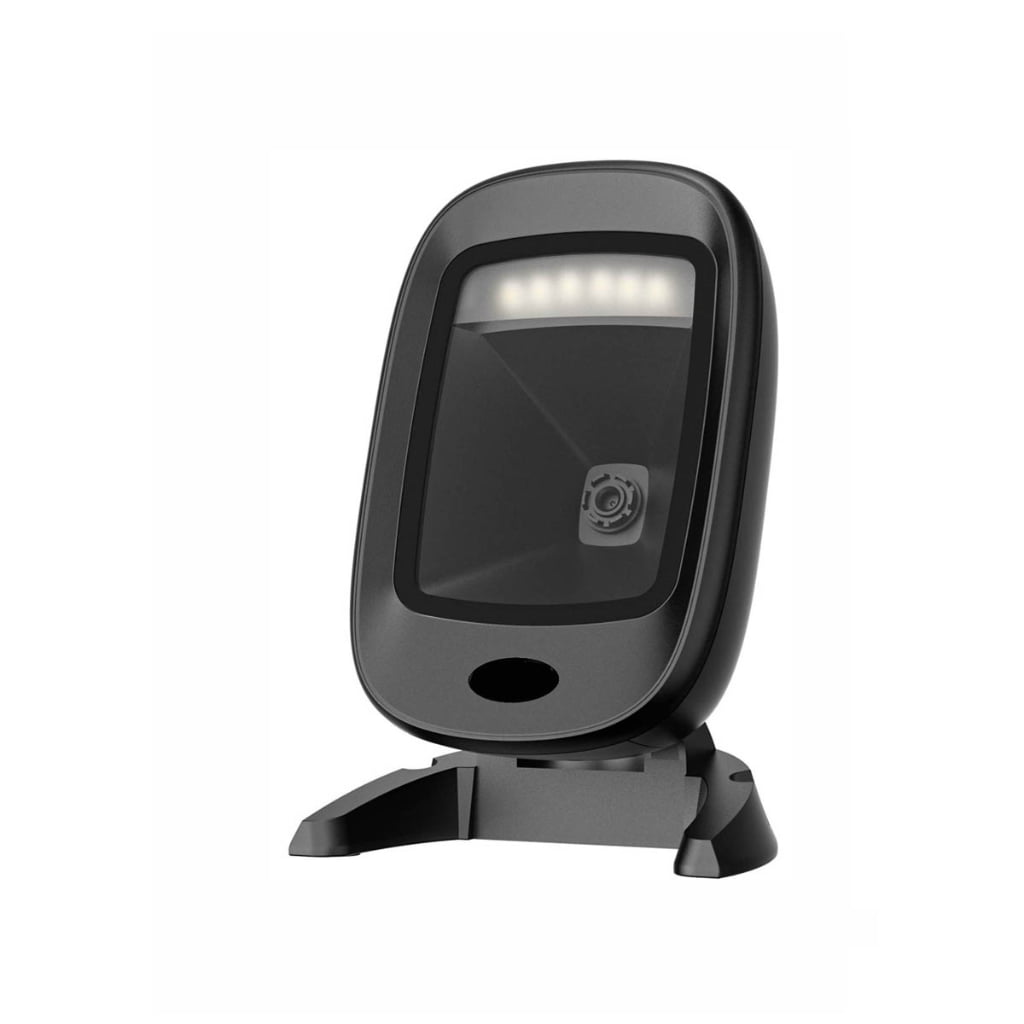
≥ 53° × 41° field of view — the code only has to be somewhere in the window
A wide window removes the aiming step: at 53° × 41° the code only has to fall somewhere inside the frame, so the item does not need to be centred or held at a set distance. The engine is 640 × 480 at 30 fps with a 4 mil floor on Code 39, and the working range is quoted at 100% print contrast — the honest band on a normal thermal label is 60–100 mm, which is where a counter reader is used. Shorter depth of field than a long-focus unit is the price of the wide field, and it is the right trade at a till.
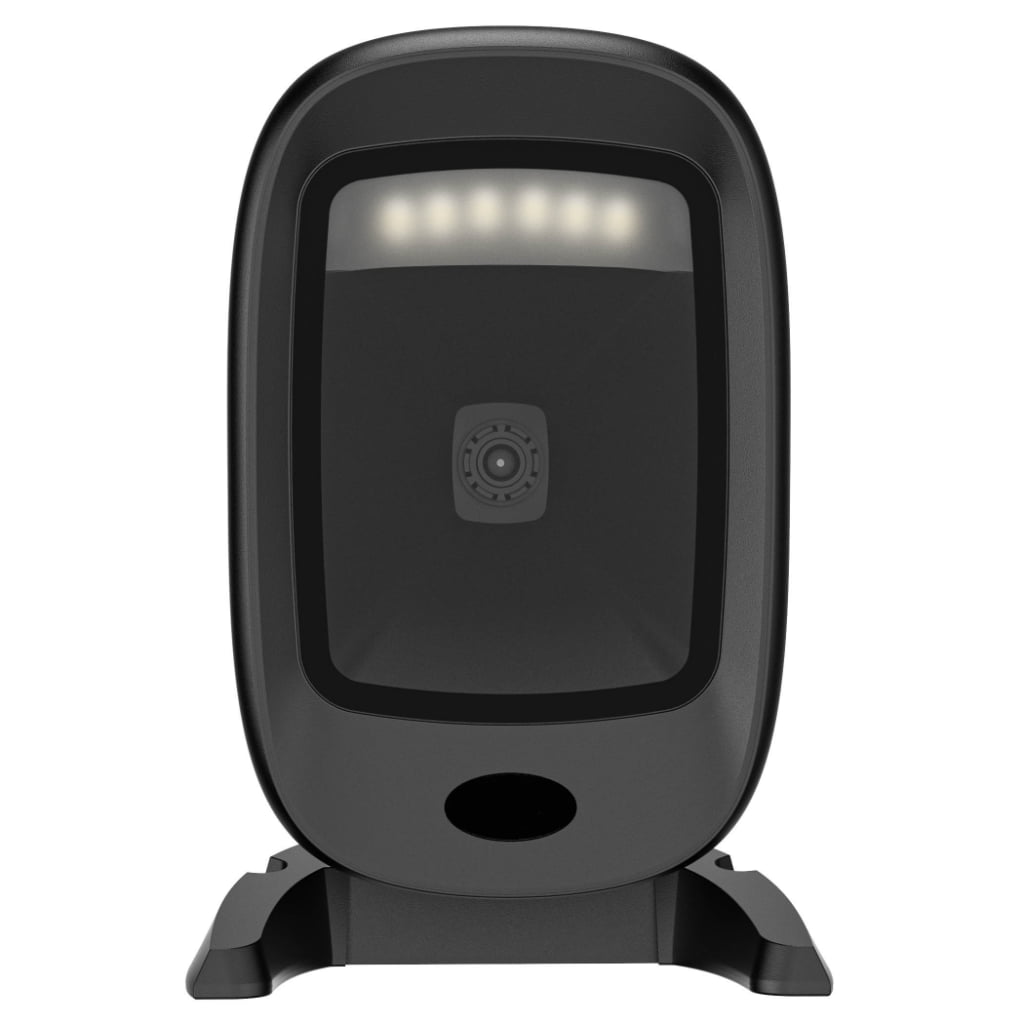
Presentation mode decodes continuously; no button press with one hand full
In presentation mode the reader decodes whenever a code is in the window, so the operator slides an item past instead of pressing a trigger with a hand already holding something else. It can be set to button-only where the reader sits beside a second scanner that would otherwise fire on the same code. Current draw is 190 mA operating and 90 mA standby, low enough to leave it in presentation mode all day rather than waking it on demand.
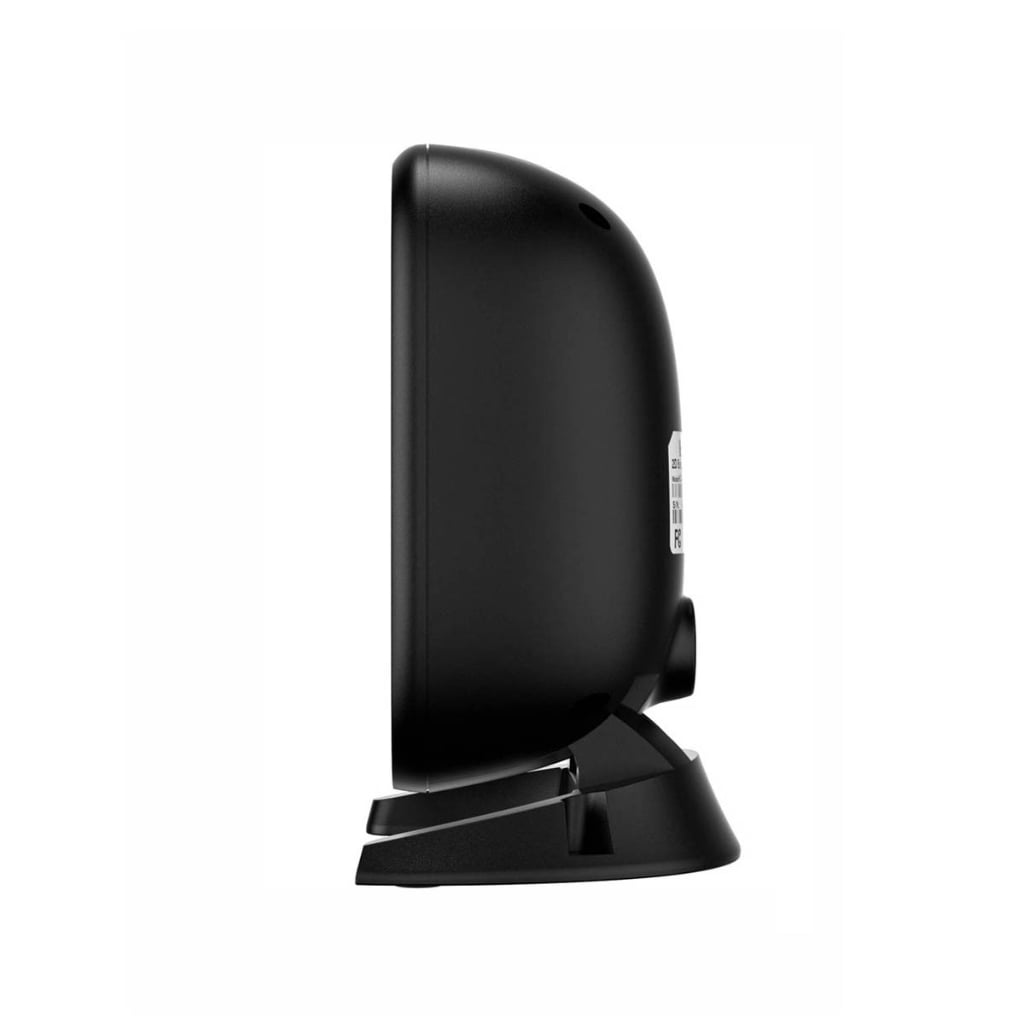
Dotcode and identity-document OCR on the same 200 g body
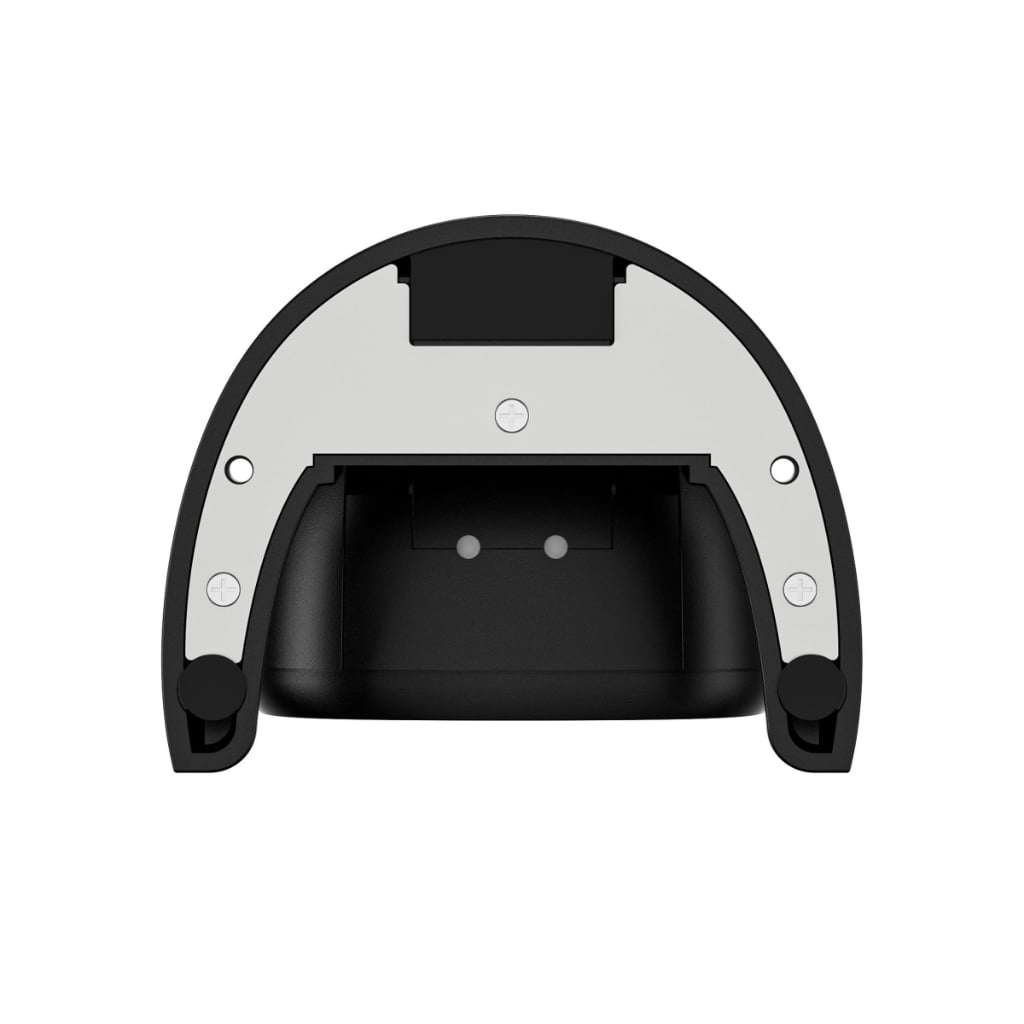
Beyond retail symbologies the engine reads Dotcode and the machine-readable zone of Chinese identity cards and a number of overseas national documents — the case that puts a reader on a pharmacy or clinic counter rather than a checkout. Passport MRZ support varies by issuing country, so send a sample image before committing to a deployment that depends on it. The body is ABS + PC at 200 g without cable, and a wide moulded base with a rubber pad holds it by friction rather than by weight.
Technical Details
Full specifications, documentation, and customization options for engineering evaluation.
| Dimensions | 100 × 82 × 150 mm (L × W × H) |
|---|---|
| Material | ABS + PC |
| Barcode Scanner | 1D and 2D, 640 × 480 CMOS at 30 fps, ≥ 4 mil minimum element (Code 39); QR Code, PDF417, Data Matrix, Aztec, MaxiCode, Dotcode, GS1 DataBar Stacked; OCR for Chinese ID cards and some overseas national documents |
| Power Supply | 5 VDC ±5%, 190 mA operating, 90 mA standby |
| Environment | Operating −20 °C to +60 °C; storage −40 °C to +70 °C; 5–95% RH non-condensing; IP52; 2 m drop; ESD ±8 kV direct discharge; 0–100,000 lux |
Frequently Asked Questions
Common inquiries from retailers, system integrators, and procurement teams.
Is 200 g too light to stay put on a counter?
The moulded base has a wide footprint and a rubber pad, so it resists sliding. Friction holds it, not weight. That is also why a knock tips it rather than dragging it into the customer's basket.
Can the presentation mode be turned off?
Yes. It can be set to trigger on button press only, which is the setting to use where the reader sits next to a second scanner and both would otherwise fire on the same code.
Does the OCR work on passports?
The engine handles the machine-readable zone of Chinese identity cards and a number of overseas national documents. Passport MRZ support varies by issuing country — send us a sample image before committing to a deployment that depends on it.
Why is the depth of field shorter than on other readers?
Because it is quoted at 100% print contrast, not 90%. The honest operating range on a normal thermal label is 60–100 mm, which is where a counter reader is used anyway.
Request a Quote for
SN-HC666 2D Desktop Barcode Scanner
Our engineering team comes back with volume pricing, OEM options and lead time within one business day.
- Response within 24 hours
- NDA available for enterprise projects
- Free developer sample for qualified integrators
Synchronize Your Retail Ecosystem
Pair this terminal with dedicated peripherals for a fully integrated, single-vendor smart store deployment.