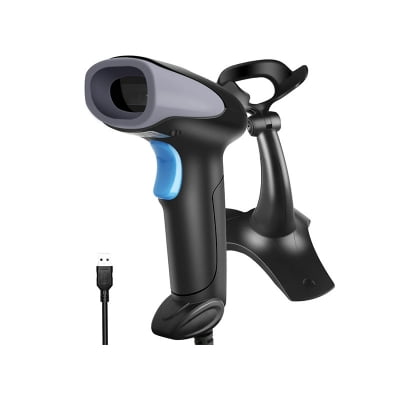
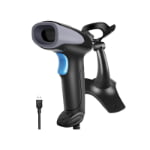
SN-HM930 Professional 2D Barcode Scanner
Retail hardware specified for the work it actually does.
A 66 mm deep body with a 2.5 m/s motion tolerance — the fastest and most compact of the three handhelds here. IP54, five drops from 2 m, sixteen keyboard layouts, and the widest symbology list in the range: Composite, DOT_CODE, MaxiCode, Pharmacode and Trioptic alongside the usual codes.
- MOQ 1 with 10–15 day lead time on stock models
- Spec sheets and SDK released before the order
- 12-month warranty, OEM branding available on volume orders
- SKU
- SQN-SN-HM930-PRO
- Availability
- In Stock
- Lead Time
- 10-15 business days
- Warranty
- 12 months standard
The SN-HM930 has a 66 mm deep body and a 2.5 m/s motion tolerance. Those two numbers point in opposite directions until you use it: the body is compact enough to sit in a drawer or clip to a lanyard, and the imager is fast enough that a code does not have to slow down to be captured. It is the fastest-moving reader of the three handhelds in this range, and the most compact.
The head is wide and flat with a red aiming line rather than a dot. That line is what lets an operator sweep across a row of goods instead of pointing at one label at a time, and it is the reason this model appears in goods-in, stock counts and pharmacy stockrooms.
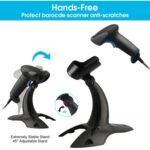
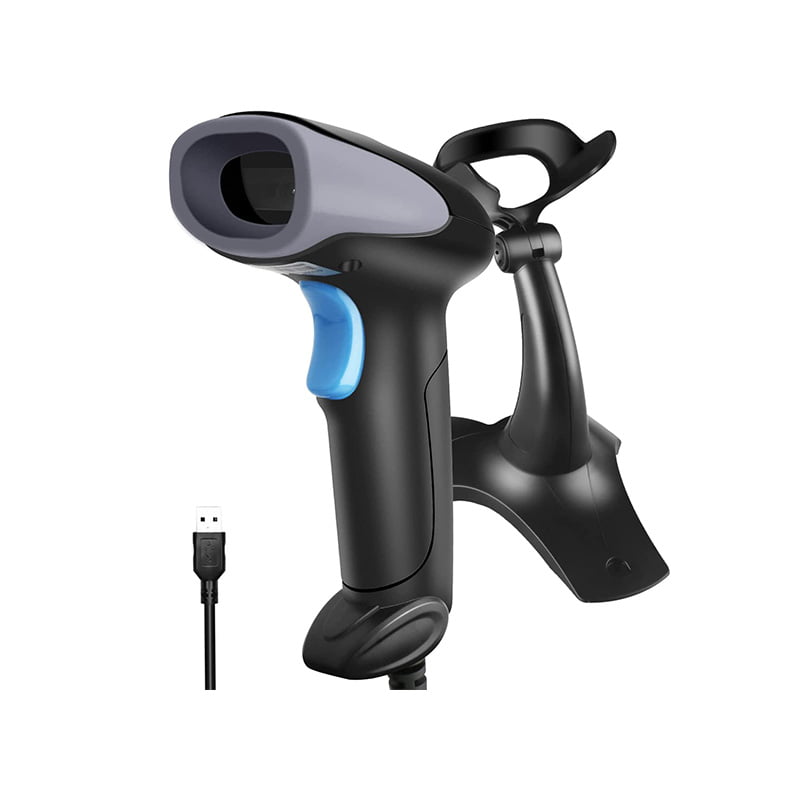
It is wired: 180 cm of cable carrying both power and data, USB or RS232. No battery, no cradle, no pairing.
Core specifications
| Imager | CMOS, 640 × 480 pixels |
|---|---|
| Motion tolerance | 2.5 m/s |
| Minimum resolution | Code 39 at 5 mil |
| Print contrast | 25% minimum |
| Scan angle | Roll ±360°, pitch ±60°, skew ±70° |
| Scan modes | Manual (trigger) and auto scan |
| Feedback | Startup, good-read and error LEDs with matching beeper tones |
The three-state feedback is worth noting because two-state readers are the norm: startup, read, and error are announced separately, so an operator knows the difference between “the reader did not see a code” and “the reader saw a code and rejected it.” On a receiving desk that distinction saves a re-scan.
Decode range
| Code 39, 6.6 mil | 40–80 mm |
|---|---|
| UPC, 13 mil | 30–220 mm |
| Code 39, 20 mil | 70–330 mm |
| QR Code, 20 mil | 30–180 mm |
The 6.6 mil row is the honest one: small elements read in a narrow band between 40 and 80 mm, so the code has to be brought close. Larger codes are far more forgiving. This is normal for a fixed-focus imager and it is why the spec sheet quotes each symbology separately instead of one headline range.
Symbologies — the widest list in this range
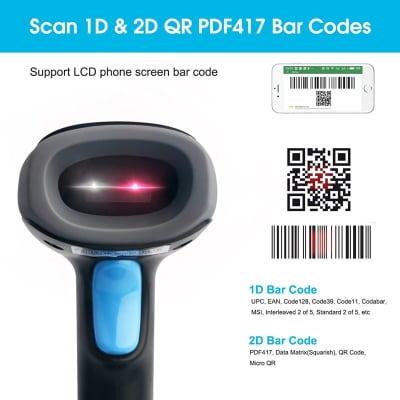
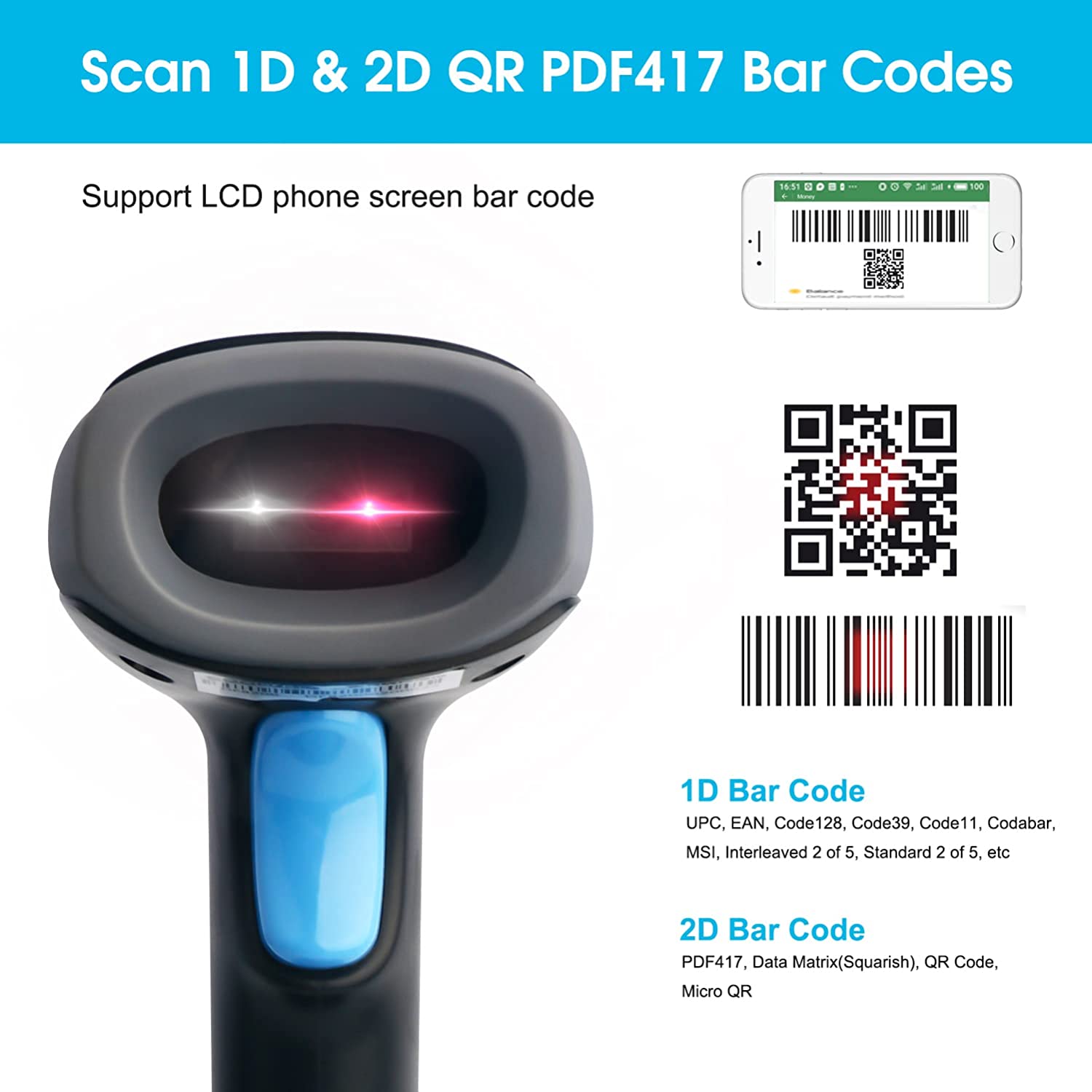
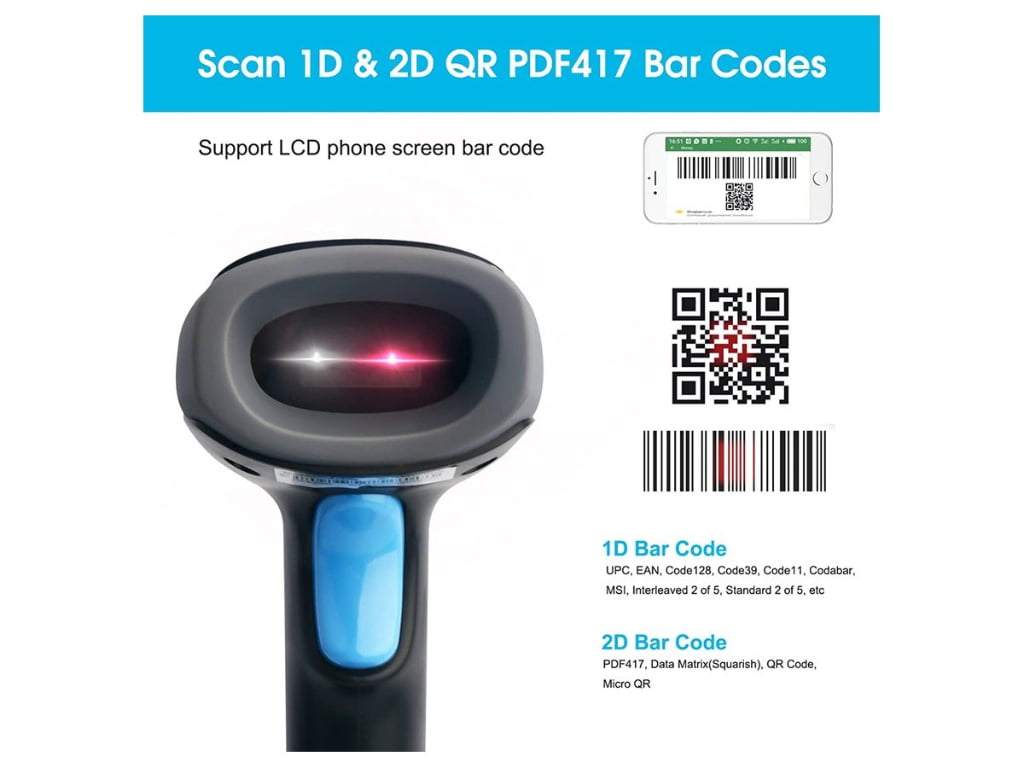
1D: Code 39, Code 39 full ASCII, Code 32, Code 11, Code 93, Code 128, Codabar, Codablock A, Codablock F, EAN-8, EAN-13, EAN/UPC, EAN-8 converted to EAN-13, UPC-A, UPC-E, Interleaved 2 of 5, Matrix 2 of 5, Airline 2 of 5, Straight 2 of 5 Industrial, Hong Kong 2 of 5 (China Post), MSI, Pharmacode, Telepen, Trioptic Code, GS1 DataBar Omnidirectional, GS1 DataBar Limited, GS1 DataBar Expanded, RSS-14, RSS-Limited, RSS-Expanded.
2D: QR Code, Micro QR, PDF417, MicroPDF417, Data Matrix, Aztec, MaxiCode, Han Xin, DOT_CODE, Composite.
Four of those are unusual at this level and each one decides a vertical:
- Composite — a linear code and a 2D component printed as one symbol, standard in pharma and logistics where the GTIN and the batch travel together.
- DOT_CODE — a sparse dot-matrix code used on high-speed production lines and on tax stamps, where a printed bar would not survive the process.
- Trioptic and Telepen — legacy symbologies still in use in telecoms and older library systems.
- Pharmacode — the Italian pharmaceutical packing code, still mandatory on that market's cartons.
Durability
| Drop resistance | Five drops from 2 m |
|---|---|
| Ingress protection | IP54 — dust protected, water splashes from any direction |
| Operating temperature | −20 °C to +55 °C |
| Storage temperature | −20 °C to +60 °C |
| Humidity | 5–95%, non-condensing |
| Ambient light | 0–70,000 lux |
Physical, power and interface
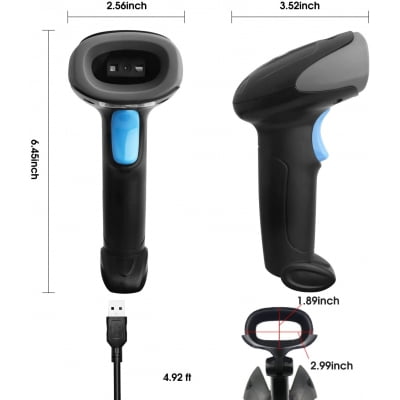
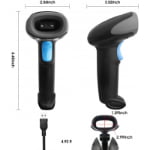
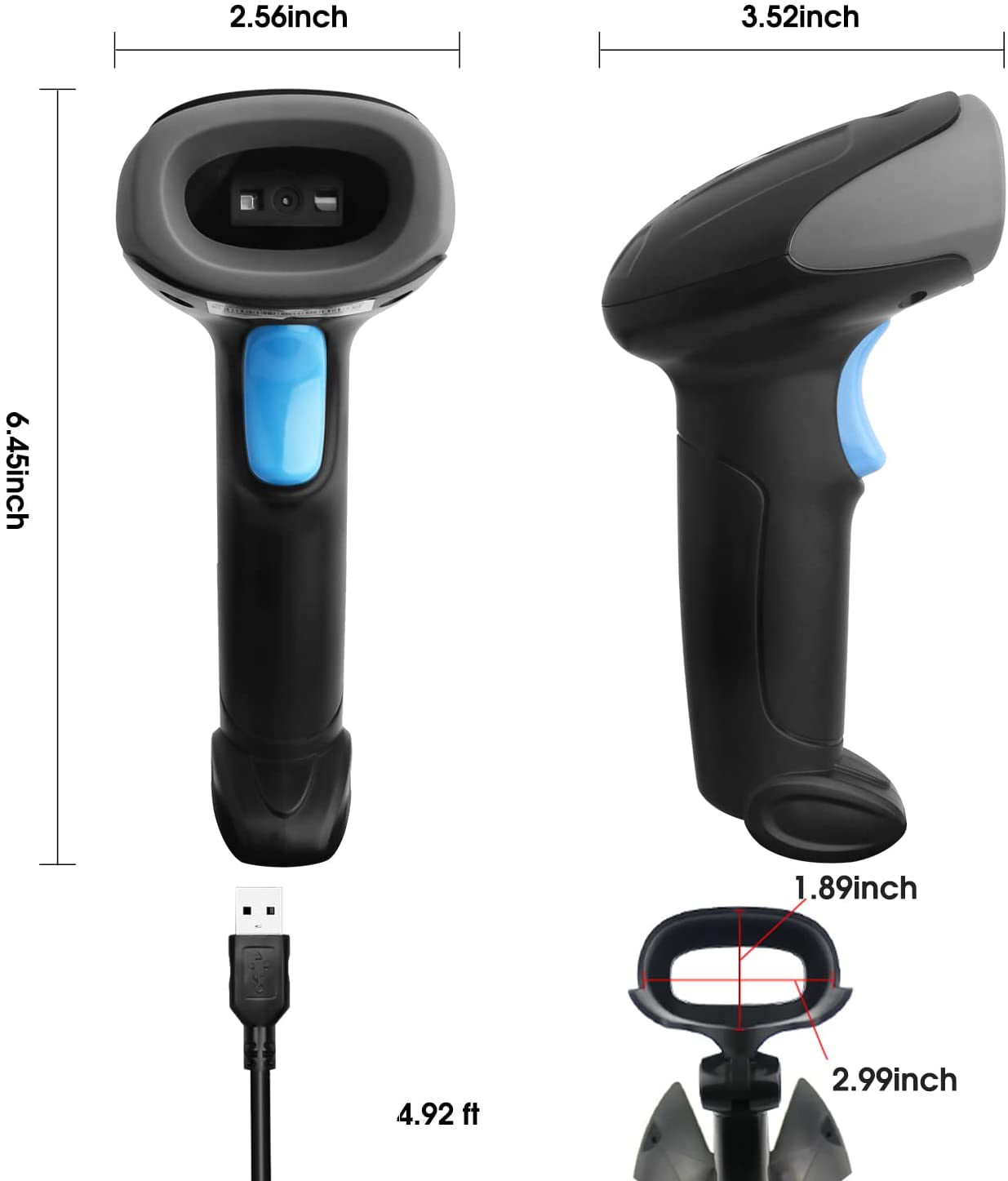
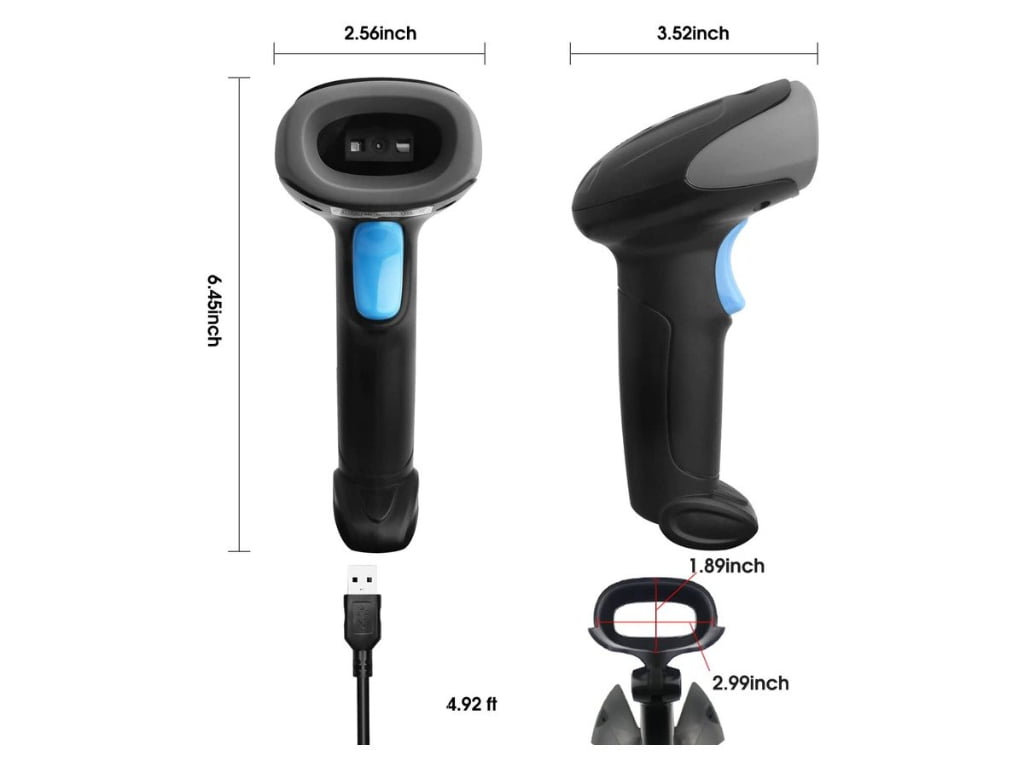
| Dimensions | 165 × 86 × 66 mm |
|---|---|
| Net weight | 173 g |
| Gross weight | 312 g including packaging |
| Cable | 180 cm ±3 cm |
| Interface | USB (HID or virtual COM) or RS232 |
| Input voltage | 5 V |
| Power | 37 mA standby · 57 mA operating · 73 mA maximum |
At 73 mA maximum this is the lowest-draw reader of the three, and it stays at 37 mA in auto-scan mode as well — continuous illumination does not change the figure. On a tablet or a battery-backed terminal that matters more than the datasheet headline.
Keyboard layouts
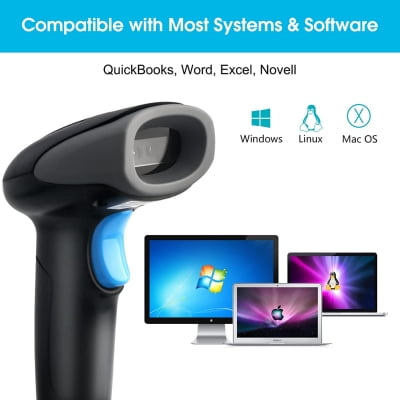
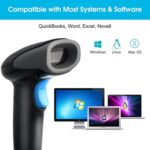
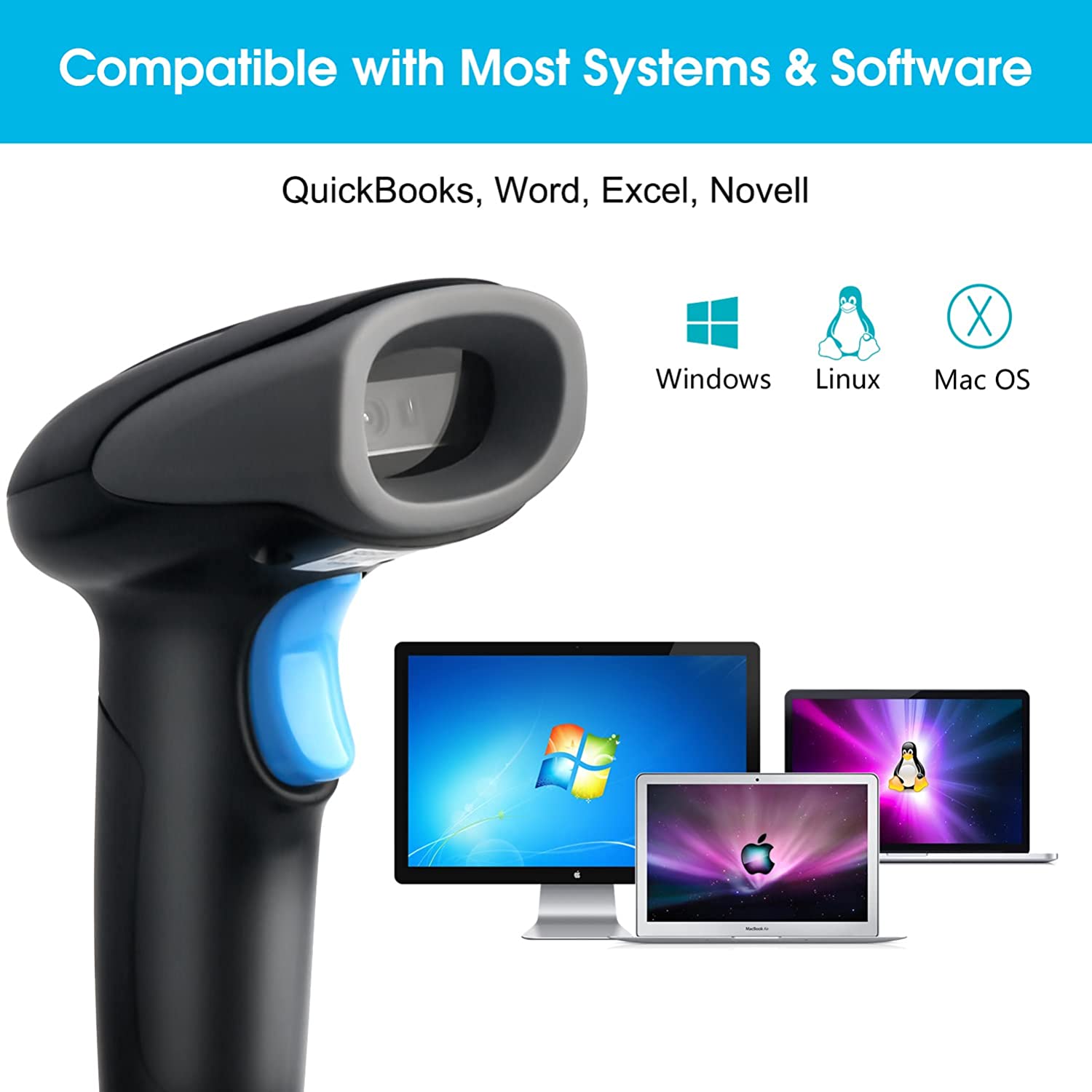
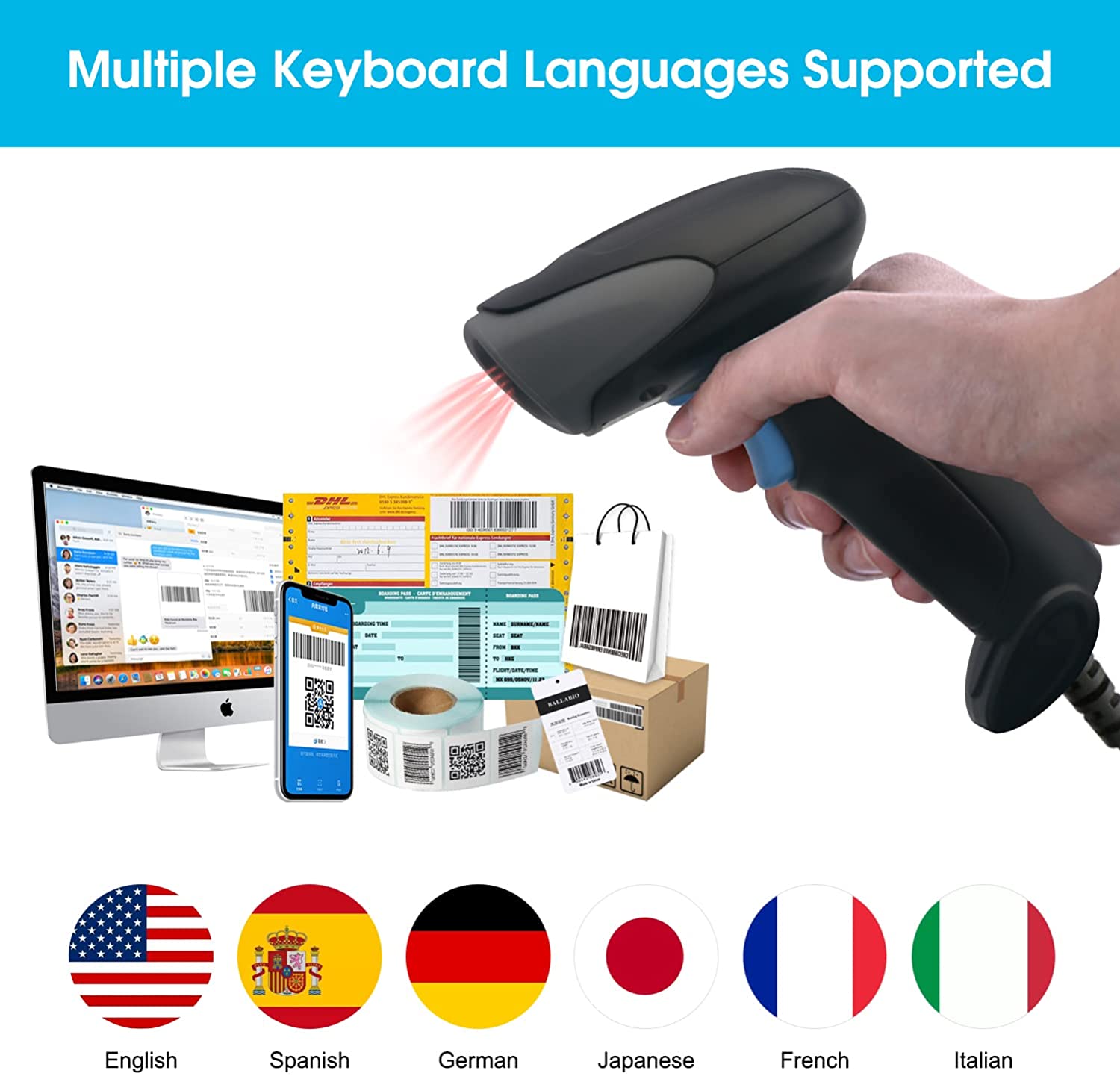
Sixteen entries covering Italian, German, Spanish, Japanese, Russian (including a separate regional variant), Sierra Leone, Turkish Q, Hungarian, Belgian, Singapore, El Salvador, French, UK, USA and Thai. Selection is by configuration barcode under Windows XP, 7, 8 or 10; Linux, Android and MacOS hosts are also supported.
Where it fits
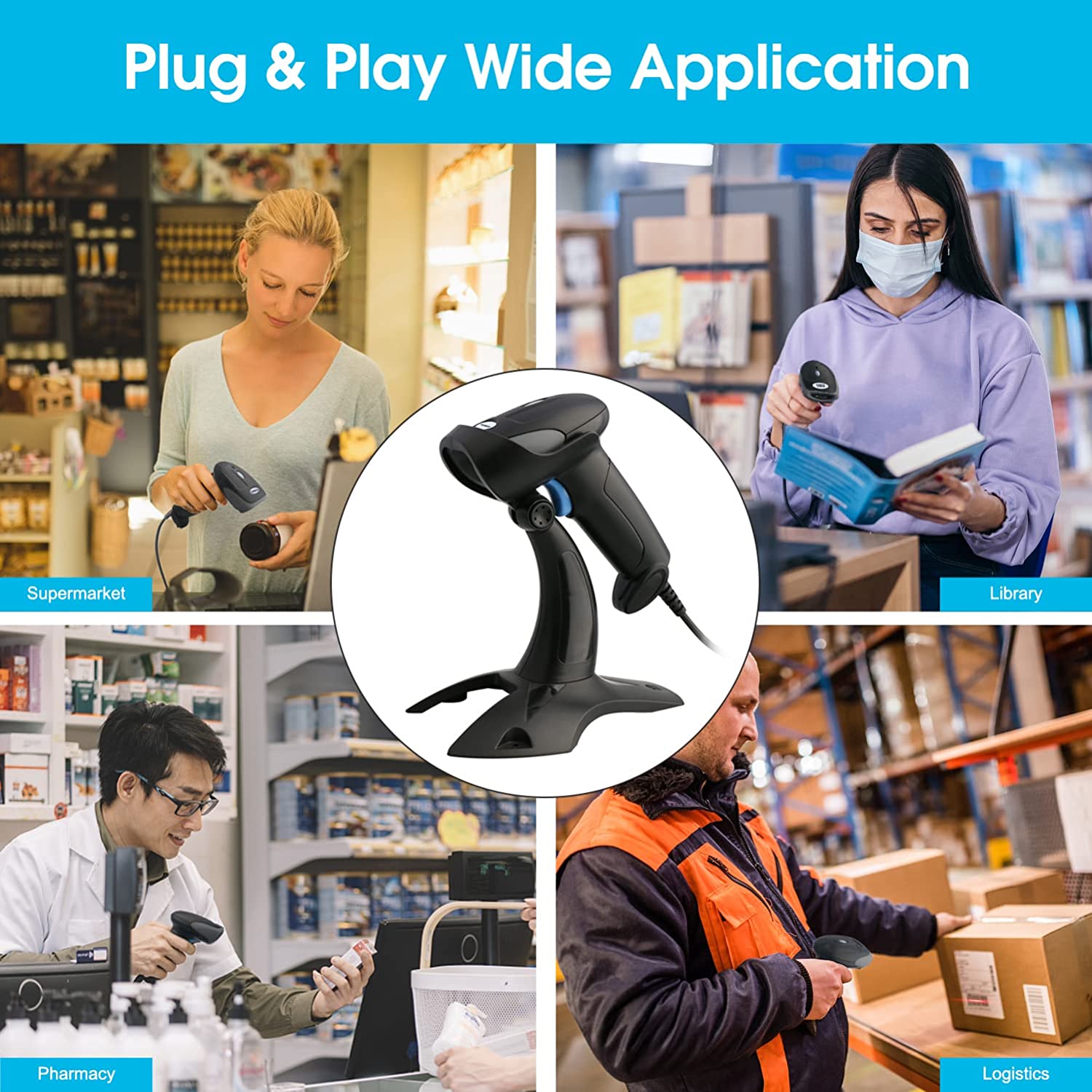
- Receiving and goods-in. Five drops from 2 m, IP54 and a line aimer: a yard reader that gets knocked about and still works.
- Stock counts and cycle counting. 2.5 m/s motion tolerance means the code does not have to pause in front of the window.
- Pharmacy. Composite and Pharmacode on the same unit as the retail EAN, with three-state feedback so a rejected batch code is not mistaken for a missed scan.
- Logistics desks. PDF417 waybills and DOT_CODE production labels without a second reader.
How it compares with the HM330 and HM410
| HM930 | HM330 | HM410 | |
|---|---|---|---|
| Motion tolerance | 2.5 m/s | 2.0 m/s | 2.0 m/s |
| Print contrast | 25% | 35% | 25% |
| Resolution floor | 5 mil | 4 mil | 5 mil |
| Reach on UPC 13 mil | 220 mm | 260 mm | 130 mm |
| Sealing / drop | IP54 / 2 m | IP54 / 2 m | IP42 / 1.5 m |
| Power at max | 73 mA | 156 mA | 140 mA |
| Weight | 173 g | 118 g | 122 g |
Short version: the HM330 wins on faded labels and reach, the HM930 wins on speed, symbology breadth and current draw, the HM410 wins on price.
Limits
Wired only. No SDK is published for this model, so any transformation beyond prefix and suffix has to happen on the host. And it is a near-field imager — the 330 mm maximum on a 20 mil code is not a rack-scanner range.
Ordering
SKU SN-HM930. Interface fixed at order: USB HID, USB virtual COM or RS232. 180 cm cable included, MOQ 1, 10–15 day lead time, OEM branding from 50 units.
Product images
2.5 m/s motion tolerance — sweep a shelf without pausing
Motion tolerance is how fast a code can cross the window and still be captured: at 2.5 m/s the operator moves along a shelf without stopping, which is the difference between counting a bay in one sweep and in five stops. Draw is 37 mA standby and 57 mA operating, 73 mA maximum — the lowest peak of the three handhelds in this range, so it runs off a phone power bank without a second thought. Element floor is 5 mil with 25% print contrast.
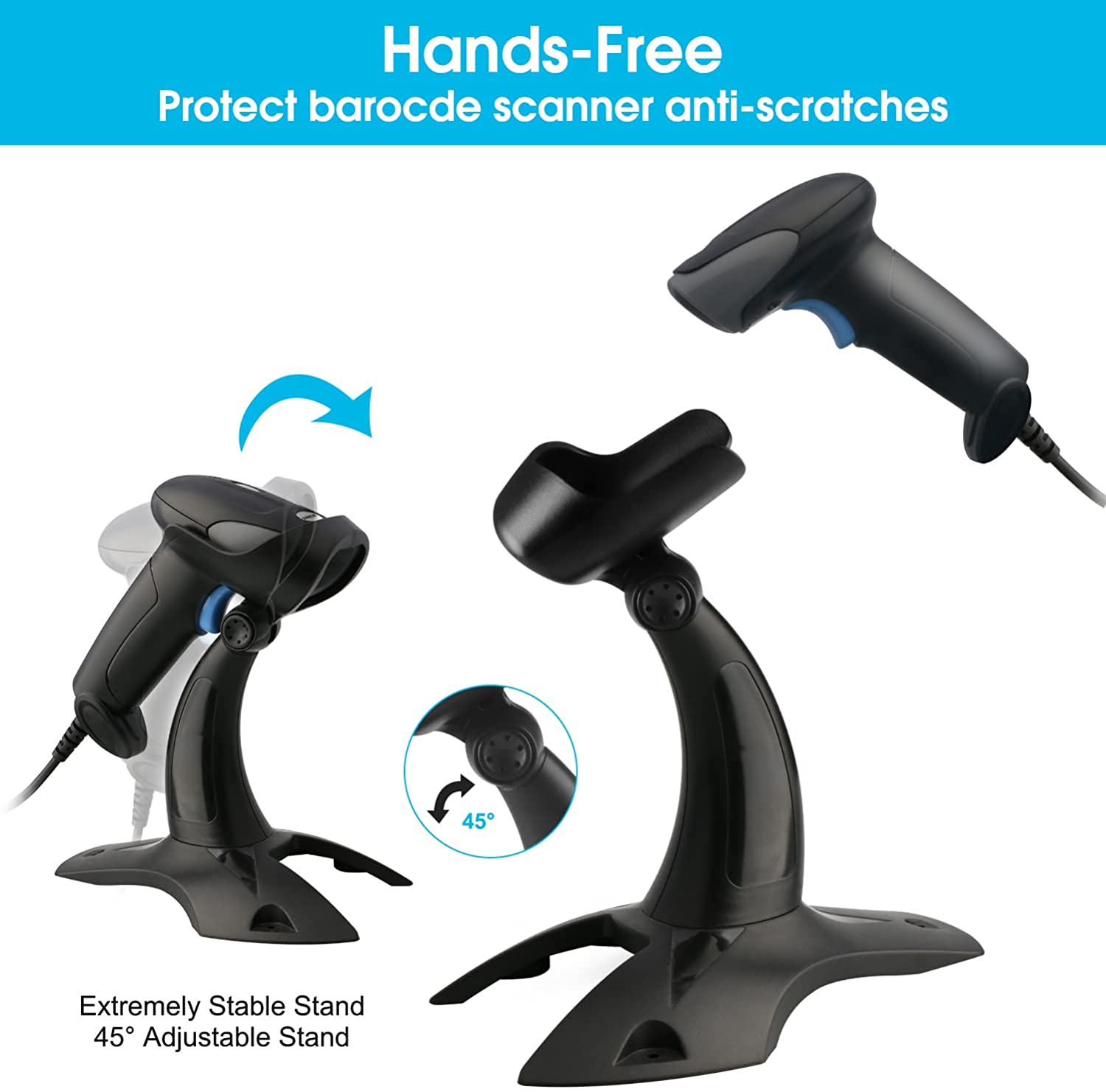
173 g and 66 mm deep, with IP54 and five drops from 2 m
The body is 66 mm deep and 173 g net, slim enough for a jacket pocket and light enough to carry through a shift. IP54 with five drops from 2 m is on the datasheet, so it is rated for the floor and the loading dock rather than desk duty only. Ambient tolerance runs to 70,000 lux, which covers a warehouse door open to daylight but not direct noon sun.
Composite, DOT_CODE, MaxiCode, Pharmacode — 29 1D and 10 2D symbologies
Twenty-nine 1D and ten 2D symbologies are decoded, including the ones that mark this as an industrial rather than a retail reader: Composite, DOT_CODE, MaxiCode, Pharmacode, Trioptic and Telepen. That breadth lets one SKU cover a pharmacy, a parcel sort line and a manufacturing cell without a firmware decision. Han Xin is included for Chinese domestic labels. If the stock you scan is GS1 DataBar only, a narrower reader does the same job for less.
Technical Details
Full specifications, documentation, and customization options for engineering evaluation.
| Dimensions | 165 × 86 × 66 mm (L × W × D) |
|---|---|
| Barcode Scanner | 1D and 2D, 640 × 480 CMOS; Code 39 ≥ 5 mil; print contrast ≥ 25%; QR, Micro QR, PDF417, MicroPDF417, Data Matrix, Aztec, MaxiCode, Han Xin, DOT_CODE, Composite; 29 1D symbologies including Trioptic, Telepen and Pharmacode |
| Power Supply | 5 V; 37 mA standby, 57 mA operating, 73 mA maximum |
| Environment | Operating −20 °C to +55 °C; storage −20 °C to +60 °C; 5–95% RH non-condensing; IP54; five drops from 2 m; ambient light 0–70,000 lux |
Frequently Asked Questions
Common inquiries from retailers, system integrators, and procurement teams.
What does 2.5 m/s motion tolerance actually mean?
How fast a code can cross the window and still be captured. At 2.5 m/s the operator can move the reader along a shelf without pausing, which is the difference between counting a bay in one sweep and in five stops.
Why is the 6.6 mil range so narrow?
Because a small element only resolves inside a short band on a fixed-focus lens. 40 to 80 mm for 6.6 mil is normal; the wider 30 to 220 mm band applies to a 13 mil retail label, which is what most counters actually scan.
Does it need a driver?
In USB HID mode, no — it types into whatever has focus. USB virtual COM uses the in-box CDC driver on Windows 10 and 11. RS232 needs nothing.
Can it read a code on a phone screen?
Yes, and the ambient ceiling of 70,000 lux covers an indoor desk. Direct outdoor sunlight at noon will exceed it.
HM930, HM330 or HM410 — which one should I quote?
HM330 wins on faded labels and reach (35% contrast, 42 cm on a 20 mil code). HM930 wins on speed and symbology breadth (2.5 m/s, 73 mA max, Composite and DOT_CODE). HM410 wins on price but is IP42 with a 130 mm reach, so it only suits a fixed desk.
Request a Quote for
SN-HM930 Professional 2D Barcode Scanner
Our engineering team comes back with volume pricing, OEM options and lead time within one business day.
- Response within 24 hours
- NDA available for enterprise projects
- Free developer sample for qualified integrators
Synchronize Your Retail Ecosystem
Pair this terminal with dedicated peripherals for a fully integrated, single-vendor smart store deployment.