Most POS factory audits produce the same document: a clean floor, a photograph of a pick-and-place machine, and a capability statement signed by a sales manager. None of that answers the question the audit was supposed to answer, which is whether the five hundred units will arrive in the specification that was quoted, on the date that was promised, at a defect rate the buyer can live with.
This checklist is built around the twenty-four items that actually move that answer. Each one is written as three things: what to ask, what a competent answer sounds like, and what a rehearsed one sounds like. It closes with the six questions that reveal more than a full factory tour, a scoring method, and the numbers we publish about our own facility in Shiyan, Shenzhen, so the standard gets applied to us first.
What a Factory Audit Can and Cannot Tell You
An audit tells you whether an organization is capable of running the process it claims. It does not tell you whether your specific order will be run that way in eight weeks, when the visit is a memory and the line is chasing a shipment.
Two things close that gap. The first is evidence that gets generated automatically rather than on request — inspection records with dates, repair logs, component lot numbers tied to serial numbers. The second is a written change-control rule that says what happens when a part goes on allocation. An audit that gathers the first and negotiates the second has done its job.
What an audit cannot do is replace a pre-shipment inspection on the actual batch. If the budget covers only one, spend it on the PSI. The audit protects the relationship; the PSI protects the shipment.
Before the Visit: Five Documents Worth Requesting First
Ask for these by email. Roughly a third of suppliers will fail somewhere in this list before a meeting is even scheduled, which saves you the flight. If you are earlier than that and want the questions rather than the on-site checklist, the twelve to ask before you wire a deposit are the short version.
- Business license. Check the registered business scope, the establishment date, registered capital and — most important — whether the company issuing your quotation is the same legal entity that operates the factory. Trading entities and factories frequently share an address and a logo and nothing else.
- ISO 9001 certificate, including the scope page. Verify the certificate number on the certification body's own website. A PDF proves that someone can operate a PDF editor; the certification body's database proves the certificate exists.
- Product certificates with the underlying test reports. CE without the test report is a logo. An FCC ID can be looked up in the public OET database, and the grantee name there should match the company you are dealing with. For wireless products, the RED report should name the radio module inside the unit, not just the finished product.
- Premises evidence. Lease or property deed plus a floor plan with dimensions. The square meters should survive contact with the address on the license. Some suppliers present a partner's building as their own; the lease is where that story usually ends.
- The last three third-party inspection reports, for any customer. Not the client you are replacing — any three. A factory that has never been inspected by an outside body is not automatically a bad factory, but it has never had its own numbers checked by someone with no reason to be polite.
The 24-Point Checklist
Group 1 — Legal and Commercial Identity
1. The quoting entity is the manufacturing entity. Ask for the license, the factory address printed on it, and the name on the bank account that will receive the deposit. Three names, one company. A Hong Kong or offshore exporter is normal in Chinese manufacturing, but find out which mainland company performs the production and put that name in the contract.
2. The business scope covers manufacturing. On a Chinese license, a trading company's scope reads 销售 — sales. A factory's reads 生产 or 制造 — production or manufacturing. If the scope is sales only, you are buying from a trader, and the price quietly includes a margin plus a supply risk you cannot see from the outside.
3. Establishment year and registered capital. The year tells you how many product generations the company has survived, which matters more than the size of the building. Registered capital tells you who carries the liability if a batch fails in the field.
4. Who owns the tooling, the firmware and the logo files. Ask before you pay a tooling fee. The industry default is that the factory owns the mold the customer paid for. Get one clause in writing: tools, firmware images and brand assets produced for this order remain the customer's property and are returned or destroyed on request.
Group 2 — Production Lines and Capacity
5. What counts as a line. "Four assembly lines" can mean four conveyors with forty stations or four benches with eight. Ask for stations per line, the cycle time at the bottleneck station, and the model mix currently running on each line.
6. Output for your product class, not total capacity. A factory that builds cash drawers and terminals will quote one monthly figure that is arithmetic across both. Ask for the last three months of output for models comparable to yours. That is the number that decides your lead time, and it is usually smaller than the headline.
7. Shift pattern. Published capacity almost always assumes two shifts. If the factory runs one, halve the figure before you plan a rollout. Ask what time the second shift starts and who supervises it — the answer tells you whether the second shift is real or a brochure number.
8. Where the board assemblies come from. Ask the question in exactly these words: is SMT in-house or outsourced? An answer that describes the machines without naming the building is an answer about a partner. Outsourced placement is common and can be excellent — some of the largest POS manufacturers in Shenzhen outsource it — but it changes the failure modes you need to inspect for, and it adds a queue you do not control.
Group 3 — Quality System and Inspection
9. QC headcount, and who they report to. Six inspectors against one hundred and twenty production staff is five percent, which is a real function rather than a title. The follow-up question matters more: does QC report to the production manager? If it does, the inspection gate is advisory.
10. Incoming inspection on the parts that actually fail. LCD panels, thermal print heads, scan engines and power adapters account for most field failures. Ask for the incoming AQL level on those four categories specifically, plus last month's rejection record for each.
11. In-process gates. Ask for the process flow chart with the inspection points marked, then compare it against what is on the floor. A flow chart with five gates and a floor with one final check describes an intention, not a system.
12. The final inspection standard, with numbers. The right answer sounds like this: AQL Level II, Major 0.65, Minor 1.0, with key functions tested at one hundred percent rather than sampled. Vague answers such as "we check every unit carefully" mean there is no sampling plan, which means there is no defensible accept-or-reject rule when a batch lands on the borderline.
Group 4 — Test Equipment and Reliability
13. Burn-in: positions, hours, temperature. A powered aging area is the most expensive item on this list and the hardest to fake, because it consumes floor space and electricity whether or not anyone is watching. Ask how many units can sit powered at once, for how long, and at what ambient temperature. Forty-eight hours is a serious number. Two hours is a functional test with a better name.
14. Drop test. Height, orientation, bare unit or packaged, and which standard is referenced. Packaging drop to ISTA 1A or 3A is not the same test as product drop, and buyers regularly accept one when they asked for the other.
15. Environmental and corrosion testing. A temperature and humidity chamber qualifies the operating range. A salt spray chamber covers plated metal parts — cash drawer bodies, hinges, brackets — and matters for coastal and humid markets. Ask for the chamber range and the hours, not just whether the box exists.
16. Electrical safety testing. Hipot, insulation resistance and grounding continuity, and whether they run on one hundred percent of units or on a sample. For a product with a metal enclosure and a mains input, this is the test that keeps the certificate valid after the first production change.
Group 5 — Traceability and Change Control
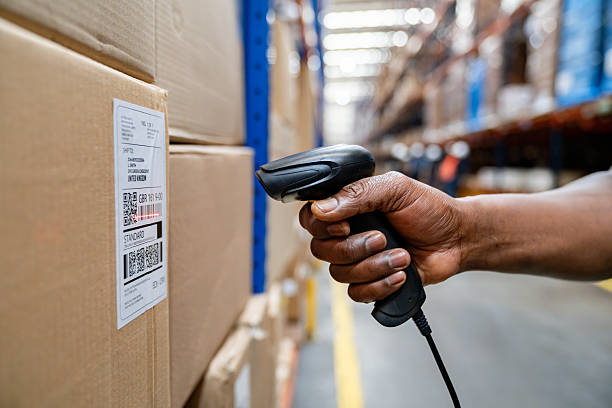
17. Serial number traceability. Pick a serial number from last month and ask what it resolves to: line, date, operator, component lot, firmware version. If the answer stops at the date, a field failure cannot be narrowed to a batch, and every complaint becomes a negotiation.
18. The substitution rule. What happens when the LCD panel or the memory chip goes on allocation? A good answer names the approval process, the notification requirement and the BOM revision record. A bad answer is "we use an equivalent". An equivalent part makes a different product, and the buyer should decide whether to accept it rather than discover it in a teardown.
19. Firmware and OS control. Who holds the signing keys, is the image hashed and versioned per order, and can the customer obtain the build configuration. On Android terminals this decides whether you can patch a security issue on your own schedule or wait for someone else's release cycle.
20. Rework and repair records. Ask how many units went back to the line last month and why. A factory with a repair log is a factory that measures. A factory reporting a hundred percent first-pass yield is a factory that does not.
Group 6 — After-Sales and Documentation
21. Spare parts policy. What percentage of the order ships as spares, which parts are included, and how long those parts stay available after the final shipment. The honest answer for a mature product line is three to five years.
22. RMA terms. Turnaround days, who pays freight in each direction, what counts as customer-induced damage, and whether advance replacement exists for key accounts. Ask for the actual RMA form rather than a description of it.
23. Documentation set, by language. User manual, quick start, driver package, SDK, API reference and the declaration of conformity. The usual failure is not a missing document — it is a manual translated by someone who has never used the product, which converts into a support cost on your side of the deal.
24. Packaging and loading. Drop test on the export carton, pallet specification, and a container loading plan with carton counts per model. In a mixed container, this is where the last-minute surprises live.
How to Score the Answers
Give each item a pass or a fail and apply the group rules below. Three points are unconditional: SMT ownership, burn-in hours and the substitution rule cannot be traded against anything else on the list, because each one changes the risk profile of the order rather than the comfort of the buyer.
| Group | Points | What a pass requires |
|---|---|---|
| Legal and commercial identity | 1–4 | All four. Point 4 in writing. |
| Lines and capacity | 5–8 | Three of four, and point 8 unconditional. |
| Quality system and inspection | 9–12 | All four. Point 12 requires numbers. |
| Test equipment and reliability | 13–16 | Three of four, and point 13 unconditional. |
| Traceability and change control | 17–20 | Three of four, and point 18 unconditional. |
| After-sales and documentation | 21–24 | Three of four. |
A supplier that fails one group rule is not disqualified — plenty of good factories have a weak documentation set or no salt spray chamber. A supplier that fails two group rules, or any of the three unconditional points, is a supplier whose problems you will be managing for the life of the product. Price that in before the purchase order, not after.
Six Questions That Reveal More Than the Tour
If the visit is short, ask these six and listen to how the answers arrive.
- "Can I see the BOM?" Not to copy it. A factory willing to open a BOM in front of a customer is a factory that knows which parts are its own decision and which belong to the customer.
- "Who does your SMT?" The answer arrives in under two seconds, or it is being composed.
- "What was last month's repair rate?" A number, or a story.
- "What changed in this product in the last twelve months?" Silence means nobody tracks revisions. A list means the change-control rule from point 18 is real.
- "Which customer owns this mold?" The answer tells you whether the "our own design" pitch survives contact with the tooling.
- "Can you send the AQL plan for this order?" The document that exists before the order, not after the complaint.
What Our Own Facility Would Show You
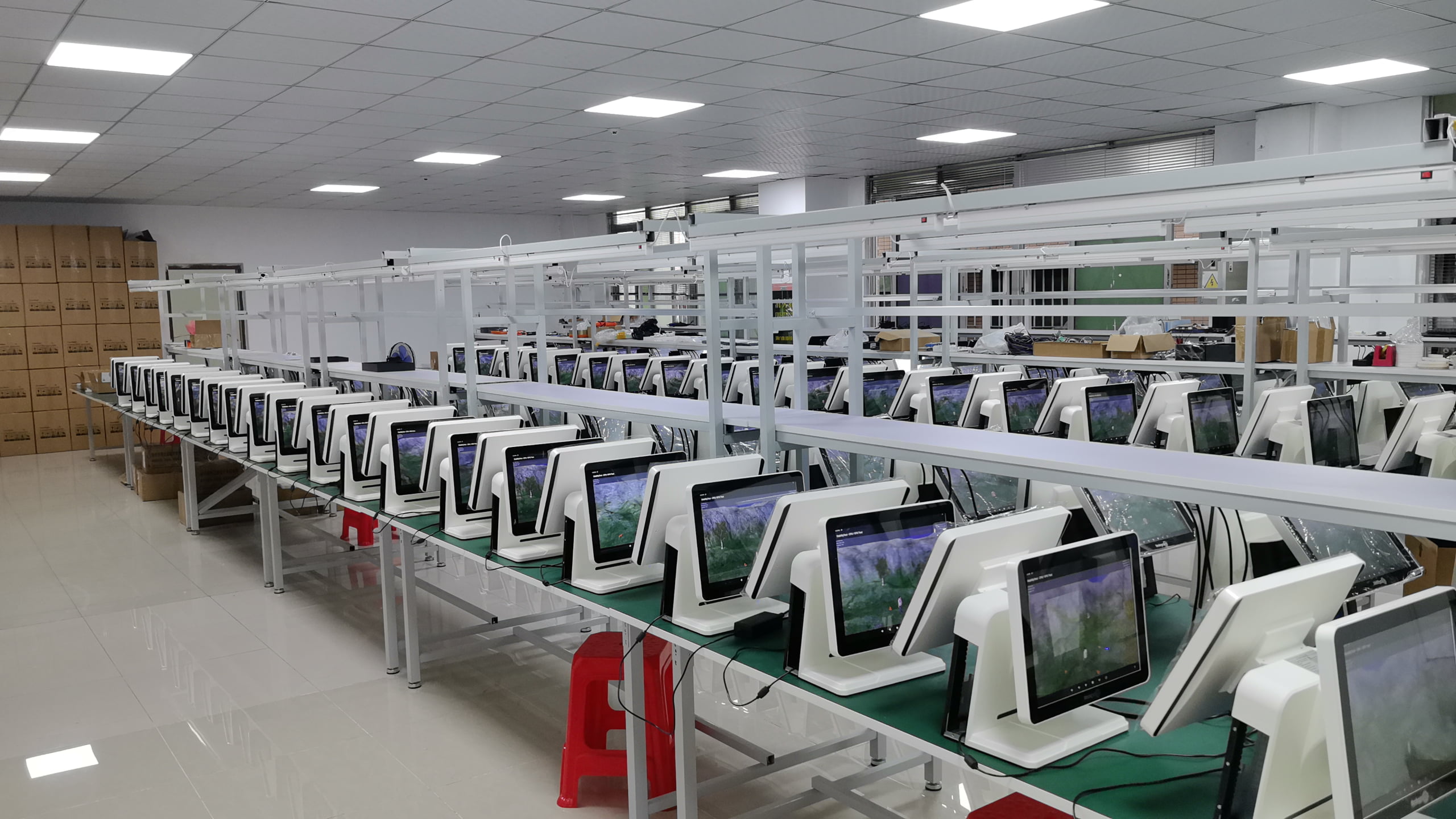
TillNode has assembled retail hardware in Shiyan and Shajing, Shenzhen since 2019. The plant runs 5,400 m² with four assembly lines and 120 production staff, six QC inspectors and four design engineers. Monthly capacity reaches about 20,000 units across the product range, which includes terminals, printers, cash drawers, scanners and electronic shelf labels.
SMT placement happens at a partner facility. We do not operate a placement line, and we say so before a customer asks — point 8 of this checklist applies to us as much as to anyone. Assembly, functional test, burn-in and packing all take place in-house.
The aging area holds 1,200 to 1,500 units at full load. At 48 hours per position that releases 600 to 750 units a day, and over 26 working days it puts monthly throughput between 15,600 and 19,500 units — which is what makes the 20,000-unit figure earlier in this section arithmetic rather than a number on a slide. Around 800 positions carry production aging in a normal week; the rest hold first-article units, samples waiting for inspection and units pulled for return analysis. Cash drawers, scanners and shelf labels run their own test plans rather than the terminal burn-in cycle. Inspection follows AQL Level II with Major 0.65 and Minor 1.0, and every key function — display, touch, printing, scanning, radio, power — gets tested on one hundred percent of units rather than sampled. A drop tester, a salt spray chamber and a temperature and humidity chamber are on site.
On the most recent order that went through third-party inspection, the customer tightened the Major limit to 0.4 and the inspector drew 50 units from the batch: zero critical, zero major, one minor, overall pass. The result is not the interesting part. The interesting part is that the numbers were produced by people who do not work for us.
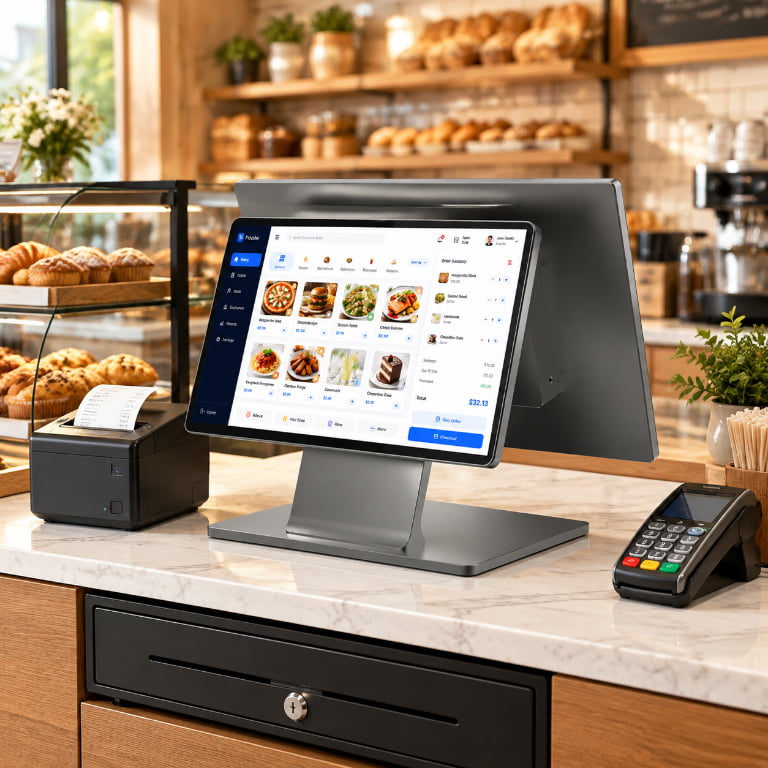
The full facility breakdown — lines, staffing, burn-in positions, test equipment — is on the factory page, and the certificate list with issuing body and scope is on the certifications page. If you are auditing before a first order, the companion read is how to test POS hardware before bulk orders, which covers the sample you should pull yourself. The terminals this process produces are listed under all-in-one POS terminals, and the warranty and RMA terms from point 22 are published at warranty and RMA.
Frequently Asked Questions
How long does a POS factory audit take?
Plan one full day on site for a single product family, plus half a day if you want to watch a burn-in rack come off cycle and review the corresponding records. The document review beforehand takes a week of email. Two days on site is enough to cover a factory with four lines without rushing the inspection records.
Can a third-party inspection replace a factory visit?
No. A pre-shipment inspection measures the batch; an audit measures the organization. The PSI is the more valuable of the two for a first order, because it applies to the units you are about to pay for, but it cannot tell you whether the process will hold on the next order. Use the audit once, and the PSI on every shipment.
Is outsourced SMT a red flag?
Not by itself. Plenty of established manufacturers outsource board assembly and run excellent assembly, testing and burn-in in-house. The red flag is an unclear answer. What matters is that the boundary is stated, that incoming board inspection is defined, and that the queue at the partner facility is accounted for in the lead time you are quoted.
What AQL level should I require for a POS order?
AQL Level II with Major 0.65 and Minor 1.0 is the common baseline for retail hardware, with critical defects not accepted at any level. Buyers who need tighter limits on cosmetic quality can push Major to 0.4, as one of our customers did on a recent order, at the cost of a larger sample size and a higher inspection fee.
How many burn-in positions does a 500-unit order need?
Work backwards from the delivery schedule, not from the order size. Five hundred units at 48 hours each, shipped over five production days, needs about 200 positions running in parallel — 500 units divided by five days leaves 100 units entering per day, and each occupies a position for two days. Any factory quoting a 48-hour burn-in for a five-day shipment without that arithmetic available is quoting the word rather than the capability.
What should a factory audit report contain?
Photographs with timestamps, the documents collected, a pass or fail against each checklist item, the sampling plans quoted for incoming and final inspection, and the names and titles of the people who answered. A report without names is a report nobody owns, which is the same problem as an inspection gate that reports to production.
The checklist is worth what you do with the answers. Two hours spent on points 8, 12, 13 and 18 will tell you more about a POS supplier than a day of walking the floor with a sales manager, and those four are the ones most often answered with a sentence that sounds like a number but is not one.