A POS hardware RFQ usually fails for a reason that has nothing to do with the suppliers who receive it. The enquiry leaves six or seven price-moving variables open, every supplier fills the gaps with a different assumption, and the quotes that come back cannot be compared without a second round of questions. The buyer then reads the spread as sharp practice. Most of the time it is arithmetic on different specifications.
An RFQ is not a request for a number. It is the document that makes several numbers comparable. This page sets out the eight lines that move a POS hardware price, the four numbers that decide the answer before price is even discussed, a one-page template you can paste into an email, and how to read the replies when they arrive. Reading several of them against each other is a separate job, and what to normalize once the replies arrive takes it from there.
What an RFQ has to do
Three jobs, and most enquiries only attempt the first.
- Fix the scope. Every component named, every interface counted, every certificate identified by market and model.
- Make the bids comparable. Same quantity, same Incoterm, same payment terms, same acceptance standard, so that the difference in the numbers is the difference in the offer.
- Create the record. The RFQ and its answers become the annex to the purchase order. When a shipment arrives with a packaging detail nobody agreed, the RFQ is the document that settles it.
The eight lines that decide the price
These are the items where an omission changes the number, not the wording. Each one is something a factory has to guess at, and a guess in a quotation is priced as a risk.
| Line | If you leave it out | What to write |
|---|---|---|
| 1. Interface combination | You are quoted the base SKU with two USB ports; your lane needs six plus a serial port for a scale | Port count and type, whether the receipt printer is built into the terminal, and whether a drawer port is required |
| 2. Certificates, by model and market | "CE and FCC available" arrives, and the specific model turns out not to be covered for one of your markets | The markets you will sell into, and which certificate must be on file before shipment. Ask for certificate numbers with the quote |
| 3. Packaging | Plain transit carton is quoted, then retail-ready packaging adds a print run and weeks to the schedule | Retail or transit packaging, languages, who supplies artwork, whether a barcode or GTIN label is applied |
| 4. Warranty, by category | "Standard warranty" is answered as 12 months on the whole unit, against a budget built on 24 | Months required, per product category, with the exclusion list and who pays freight on a claim |
| 5. Spare parts | Spares become a separate purchase later, at list price, usually by air | Percentage of ordered units, shipped in the same carton, and whether consumables such as rollers and keys are included |
| 6. Payment terms | A 30/70 quote is compared against a full prepayment quote as if the unit prices were equivalent | Deposit percentage, balance trigger (before shipment, or against a bill of lading copy), and the currency |
| 7. Incoterm and port | EXW and CIF prices are compared directly, which is the most common arithmetic error in hardware sourcing | The three-letter term, the named place or port, and who clears import at destination |
| 8. Acceptance standard | "We inspect every unit" is unverifiable and cannot be written into a purchase order | AQL level and limits, whether function testing is 100 percent, burn-in hours, and whether third-party inspection is allowed before the balance is paid |
Line 2 is the one buyers most often get wrong, because certificates are not held per product family. They are held per model, per market, and a range that carries CE for Europe may not carry UKCA for Britain or RCM for Australia on every model in the line. An RFQ that asks "do you have CE and FCC" gets a yes, and the yes tells you nothing about the model you are buying. The same applies in reverse: a supplier who answers with a model list and a certificate number per market has told you more in one line than a page of assurances.
Line 4 deserves the same treatment. Warranty terms are not uniform across a hardware catalog. On our own list the term runs from 12 months on a receipt printer to 24 months of service coverage on an industrial mini PC, and a single warranty line in an RFQ will be answered differently by every supplier you send it to. Ask for it as a matrix.
Four numbers that decide the answer before price
Quantity, and what the first order really is
Quantity sets the price more than any other line on the page, and it has to be stated as a number rather than a range. "50 to 200 units" invites a price at the midpoint with a footnote. State the first order, then state the 12-month forecast separately, because the second number is what a factory prices tooling against. If the first order is a trial rather than a production run, say that plainly as well, because a trial is structured differently from a production order and the difference shows up in the terms before it shows up in the price.
Minimum order
Ask directly and you will get a straight answer, because it is a policy rather than a calculation. Ours is one unit on a standard configuration, and 50 units per configuration once the order carries your brand, because print and packaging runs have their own setup cost. The full policy, including how samples are charged and when that charge is credited, is on our ordering terms page.
Lead time, by what is changing
Lead time is not one number either. It depends on what has to change from the standard build. A configuration change on an existing model — processor, memory, storage, single or dual screen, MSR, NFC — runs 10 to 15 days. Appearance-only work such as logo printing, packaging or a custom boot screen runs 7 to 20 working days. New tooling or a structural change runs 15 to 50 working days. An RFQ that asks for "your lead time" gets the first number, which is why the first shipment is often late on a project that needed the third.
Requested delivery date
Give the date you need the goods at your warehouse, not the date you would like them to leave the factory. A supplier who knows the arrival date can tell you whether the order fits before the quoted lead time or after it, and that answer is worth more than a shorter number on the quotation.
What to leave out
- A competitor's model number. It invites either a copy quote or a refusal, and neither is a specification. Describe the requirement; name a model only when you are buying a replacement part.
- A single all-in price. Ask for the unit price at the stated quantity, then ask separately for the extras. A bundle hides the one line you most need to compare.
- Twenty line items in round one. Send the core configuration first. A factory will answer eight lines properly and twenty lines carelessly.
- The phrase "best price". It produces the price a supplier thinks you want to hear, not the one they can hold. Quantity, Incoterm and payment terms produce a real number.
- A company presentation. Nobody prices an opportunity from a slide deck. Send the requirements and let the presentation arrive with the answer.
A one-page RFQ you can paste
Short enough to read on a phone, complete enough to quote from. Replace the bracketed fields and send it as the body of the email rather than as an attachment, so that it survives being forwarded inside the supplier's own organization.
POS hardware RFQ - [program name] - [date]

1. BUYER AND MARKET
   Company: [name] / Destination: [country] / Import experience: [yes or no]

2. REQUIREMENT
   First order quantity: [number] units
   12-month forecast: [number] units
   Goods required at our warehouse by: [date]

3. CONFIGURATION
   Terminal: [screen size] / [operating system] / [RAM] / [storage]
   Second screen: [yes or no] / MSR: [yes or no] / NFC: [yes or no]
   Receipt printer: [built in / separate] / paper width: [58 mm / 80 mm]
   Cash drawer: [model or compartment layout]
   Barcode scanner: [handheld / desktop] / Customer display: [yes or no]

4. INTERFACES
   USB: [count and type] / Serial: [count] / LAN: [yes or no]
   Drawer port: [required / not required]

5. COMPLIANCE
   Markets we will sell into: [list]
   Certificates required before shipment, per market: [list]
   Please quote certificate numbers with the response.

6. PACKAGING
   [Retail-ready / transit only] / Languages: [list]
   Artwork supplied by: [us / you] / GTIN label applied: [yes or no]

7. COMMERCIAL
   Incoterm and named port: [e.g. FOB Shenzhen]
   Currency: [USD / EUR]
   Payment terms proposed by us: [deposit % / balance trigger]
   Warranty required, in months, by category: [list]
   Spare parts requested, as a percentage of units: [%]

8. QUALITY
   AQL level and limits required: [e.g. AQL II, major 0.65, minor 1.0]
   Function test on 100 percent of units: [confirm]
   Burn-in hours required: [number]
   Third-party inspection before balance: [acceptable / not required]

9. RESPONSE
   Please return by [date], with: unit price at the stated quantity,
   lead time from deposit, certificate list with numbers, country of
   origin and HS code.
Two details in that template do more work than they look. Asking for the country of origin and the HS code gets you a duty estimate before the goods ship, which is the figure that usually decides whether the program works. And asking for certificate numbers rather than a yes or no converts a claim into something checkable, which is the difference between a supplier who has the file and one who expects to have it by the time it matters.
How to read the reply
A quotation answers the questions it was asked and reveals, in the gaps, how the supplier works.
| What you see | What it suggests |
|---|---|
| A price with no conditions attached | The quotation is not tied to the specification, so it will not hold when the specification firms up |
| A range instead of a number, with no explanation | The supplier has not modeled your configuration, or is protecting against a cost they have not quantified |
| "Standard warranty" without months | There is no warranty matrix, which usually means no process behind it |
| Spare parts "available on request" | No allowance is built in, so the first failure is a new purchase |
| Certificates offered as a word, not a number | The files may exist for a different model or a different market |
| A two-hour answer to a custom enclosure | The number is a guess, and it will move once tooling is reviewed |
The reverse is also true, and worth saying because it is what a good reply looks like: conditions stated in the quotation, a lead time that names what would change it, a certificate list per model, and one or two questions back. A supplier who asks a question has read the document.
From quote to order
The RFQ stops being a shopping document and becomes a contract annex the moment a supplier is chosen. Three things should carry across into the proforma invoice without being retyped: the acceptance standard, the spare-parts allowance and the warranty matrix. The fourth, if you are paying for tooling, is ownership of that tooling, which is the item buyers forget and later regret.
Everything that belongs in that annex is written out on our ordering terms page, and the questions worth putting to any supplier before a deposit is wired are collected in twelve questions to ask an EPOS hardware supplier.
Where to go next
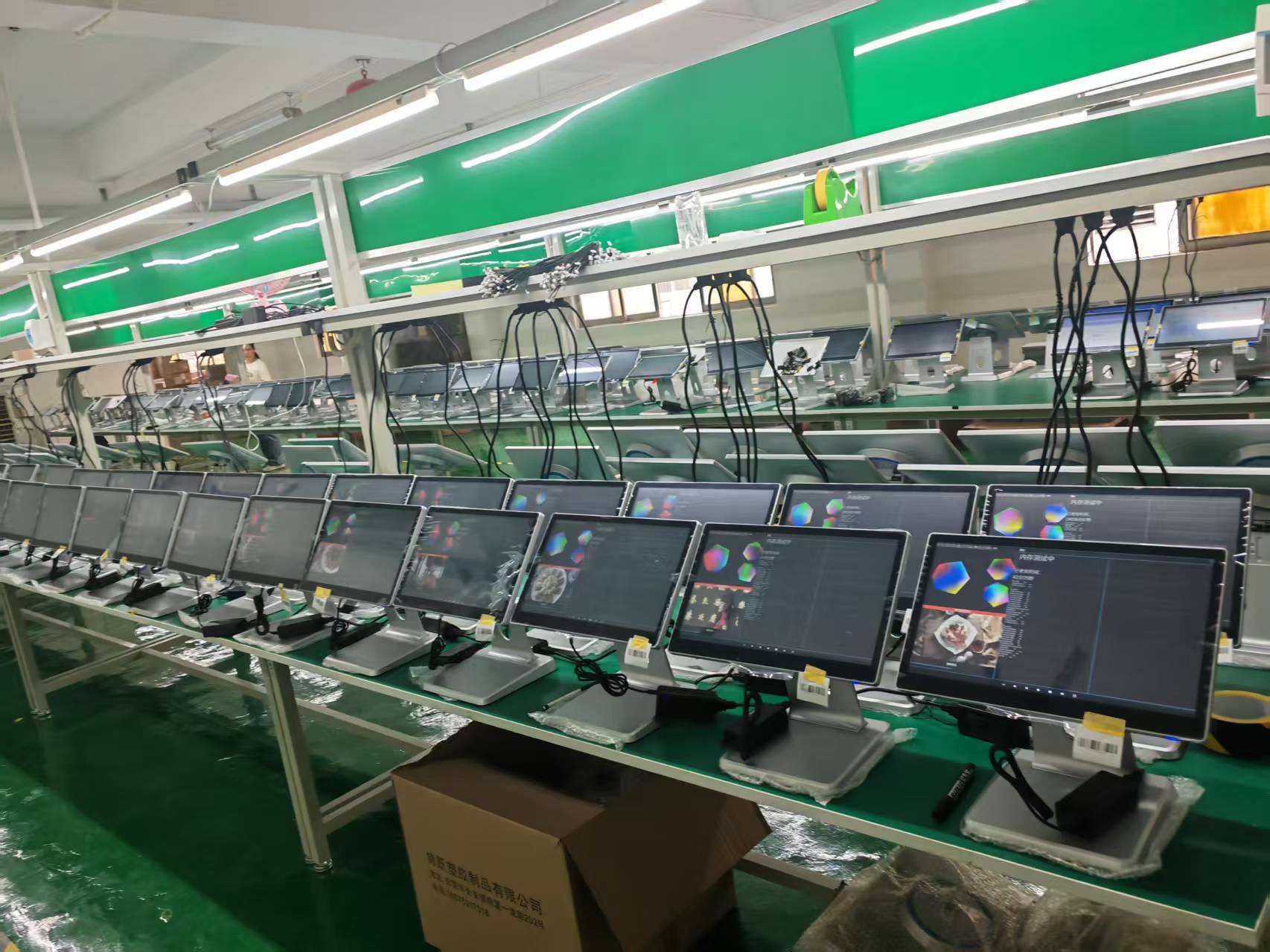
If the RFQ includes a distributor arrangement rather than a one-off purchase, the distributor program covers territory, pricing tiers and what we ask for in return. If the requirement is a branded or custom build rather than a catalog configuration, start from OEM and ODM manufacturing, and if the enquiry needs to name what is inside the box, the component list with interfaces and power draw is in our EPOS hardware breakdown. The plant the goods would ship from is described on the factory page.
Frequently asked questions
What should a POS hardware RFQ include?
Eight lines: the interface combination, the certificates required by model and market, the packaging standard, the warranty term by category, the spare-parts allowance, the payment terms, the Incoterm with a named port, and the acceptance standard. Add the quantity, the 12-month forecast and the date the goods are needed, and a supplier can quote without guessing.
How many suppliers should I send an RFQ to?
Three to five. Two is not a market, and more than five dilutes the quality of the answers because each supplier knows the odds. Two rounds works better than one wide round: send the core configuration first, then send the same refined specification to the two or three that answered properly.
Should I name a specific model in the RFQ?
No, unless you are buying a replacement unit or spare parts for equipment you already run. Naming a model invites a copy quote or a refusal, and neither tells you whether the requirement can be met another way. Specify the ports, the screen, the paper width and the market; let the supplier propose the model.
What is the difference between an RFI, an RFQ and an RFP?
An RFI asks what a supplier can do, with no price. An RFQ asks for a price against a specification you have already fixed. An RFP asks for a proposed solution including commercial terms, and it is the right document when you do not yet know what the specification should be. Sending an RFQ before the specification is fixed produces prices that cannot be compared.
How long should a quotation take?
A catalog configuration should come back within a few working days, because nothing has to be engineered. A custom enclosure takes longer and should involve questions about tooling and volume, since both change the price. A detailed answer within two hours to a custom requirement is not speed, it is a number that will move.
Can I ask for samples before placing an order?
Yes, and it is the sensible first step. On our terms, an order of up to five units is treated as a sample: the unit is charged at the standard price and the freight is yours, and that charge is credited in full when the following production order reaches around 100 units. Above five units the order is a trial run at the volume rate, and it is not credited.