Selling POS Hardware into Singapore: IMDA and Receipts
Singapore is the cheapest and fastest of the four markets in this series to register a POS terminal in, by a wide margin, and the easiest to get wrong on the receipt. The registration has a published fee and a published turnaround. The receipt problem has neither, because it is a codepage rather than a form.
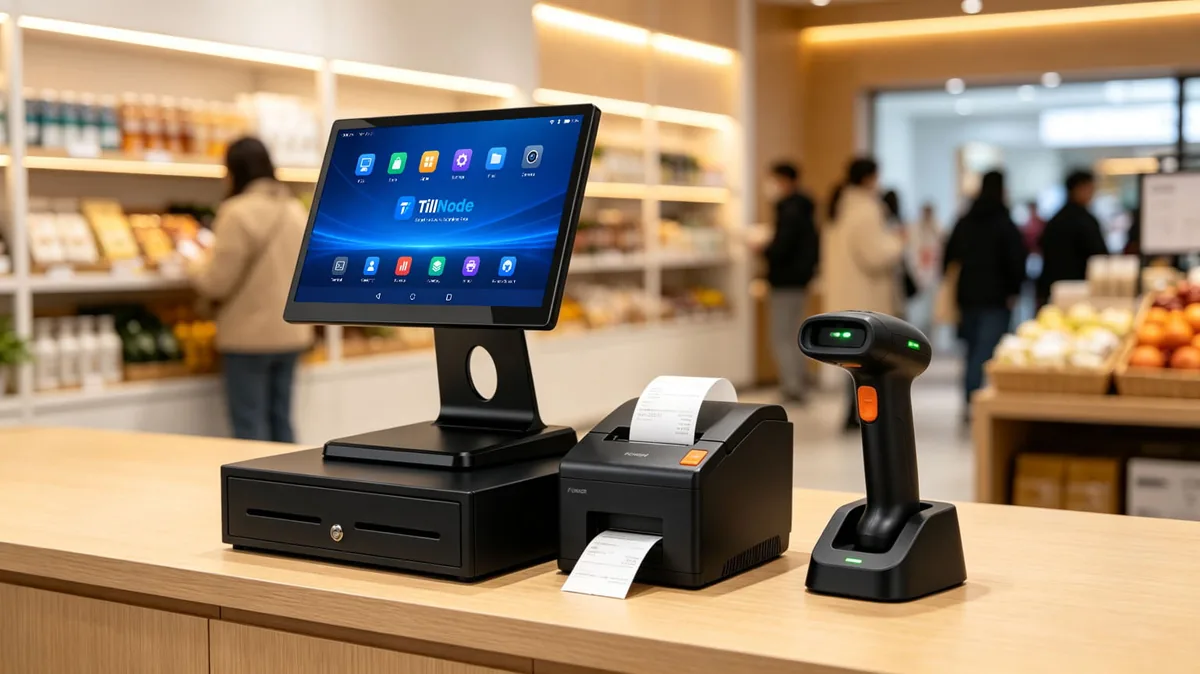
The cheapest and fastest of the four to register
The registration that matters for a POS terminal in Singapore is the IMDA equipment registration, and it comes in two flavours with very different economics. One is a self-declaration that costs nothing and is approved on submission. The other is an assessed registration that costs a few hundred dollars per model and takes about ten working days. Which one applies depends on the equipment, not on the fee the buyer is willing to pay.
| Enhanced Simplified Registration (ESER) | General Equipment Registration (GER) | |
|---|---|---|
| Cost per model | Free | S$350 or S$500 depending on the equipment |
| Turnaround | Approved automatically on submission | About 10 working days |
| Validity | 5 years | 5 years |
| Renewal | Free | S$50 per model |
| Who assesses conformity | The registrant declares it, on the basis of its own assessment | IMDA evaluates the submitted test reports |
| What it suits | Short-range and low-power devices, including wireless LAN and Bluetooth | Equipment with a high interference potential or new technology |
The difference is worth putting in money. Six models registered under the assessed route cost between S$2,100 and S$3,000 for a five-year cycle, which is S$70 to S$100 per model per year. The same six models under the self-declaration route cost nothing, and the five-year cycle starts the day they are submitted rather than ten working days later.
The reason this matters commercially is stock rotation. A distributor who adds a model to a range twice a year is making a small decision, and a distributor who has to wait two weeks for a registration is making it in a different quarter. A route that approves on submission turns a procurement cycle into an administrative step.
Who can register: the Telecommunication Dealer's License
The registration is not made by the manufacturer. It is made by a licensed dealer, and the license is the part to establish first, because nothing else can happen without it.
| Requirement | What it means in practice |
|---|---|
| Registered with ACRA | The applicant must be a Singapore-registered company, business or limited liability partnership |
| Holds a Telecommunication Dealer's License | A separate license from IMDA, held by the local dealer |
| Uses Corppass to submit | Applications are filed through the government business portal with a corporate digital identity |
| Test reports accepted from the manufacturer | For the assessed route, test reports are accepted from laboratories under a mutual recognition arrangement, from accredited laboratories, or from equipment manufacturers |
That last line is the one worth reading twice. Unlike the Australian scheme, where the evidence has to satisfy a certifier and the registration sits with a local entity that carries the liability, Singapore accepts test reports produced by the equipment manufacturer itself as the basis for a registration. The barrier is the license, not the laboratory.
GER or ESER: which route a POS terminal takes
A modern POS terminal with Wi-Fi and Bluetooth is, in the language of the scheme, a short-range or low-power device. Wireless LAN and Bluetooth sit on the list that the self-declaration route covers, which is why most terminals go that way and why the cost is usually zero.
The assessed route exists for equipment with a high potential for causing interference, and for technologies that have not settled. It is mandatory for land mobile radio, base stations, broadband access equipment, white space devices, dedicated short-range communications, ultra-wideband, and short-range devices where the operation requires approval. A terminal is none of those things. A terminal with a cellular module inside it is a different conversation.
| What is in the terminal | Route it usually takes | What that means for the schedule |
|---|---|---|
| Wi-Fi and Bluetooth only | Self-declaration | Registration the day it is submitted |
| Wi-Fi, Bluetooth and an RFID reader | Self-declaration | Same, provided the reader is a standard short-range device |
| An LTE or 5G module | Assessed registration | Ten working days, and a fee per model |
| Nothing wireless | No equipment registration; the safety scheme may still apply | The shortest path of all |
If the answer is not obvious from that table, IMDA publishes an advisory tool that walks the equipment type through the decision. It takes a few minutes and it is worth doing before a model is quoted, because the difference between the two routes is a week and a few hundred dollars per model.
230 V and Type G, with nothing to argue about
Singapore is a 230 V, 50 Hz market on the same Type G plug as the United Kingdom. The adapter range we publish covers it without a special build, and there is no fuse-rating discussion of the kind the British page has to have, because the plug is ordered to the local standard and arrives as a molded assembly.
Two practical points remain. The first is that a multi-store deployment in Singapore is usually a landlord-and-mall relationship rather than a high-street one, so socket positions are set by a fit-out contractor and a terminal that needs two sockets is a fit-out variation. The second is that the plug is the same shape as the British one, which means a shipment destined for Singapore and a shipment destined for the United Kingdom can be confused in a warehouse if the cartons are not marked by destination rather than by plug type.
Separately from IMDA, Singapore regulates a defined list of controlled household electrical goods under a safety registration scheme. Whether the external power adapter falls on that list is a question for the importer, and it is worth asking at the same time as the equipment registration rather than after the goods land.
Bilingual receipts: a codepage, not a font
Singapore has four official languages and a retail receipt is, in practice, printed in English with Chinese alongside it. Malay and Tamil appear on signage and on statutory notices far more often than on a till slip. The reason a Singapore order needs a conversation about the receipt is not the number of languages; it is that Chinese is not one character set.
| What has to print | Character set | Where it goes wrong |
|---|---|---|
| Simplified Chinese | GB2312, or GB18030 for the wider repertoire | Sending traditional characters to a printer loaded with a simplified table |
| Traditional Chinese | Big5 | Sending simplified characters to a Big5 printer, which produces the same garbled output in reverse |
| English and Malay | Single-byte Latin | Almost never a problem |
| Tamil | Needs a font the printer does not carry natively | Rarely printed on a receipt; usually rendered as an image if it must appear |
The failure looks like a font problem and is not one. A thermal printer renders whatever bytes it is given through a character table held in its firmware, and if the table is GB and the bytes are Big5, every Chinese character becomes a different Chinese character or a blank. The printer is working perfectly. The two ends are speaking different encodings.
The fix is to establish which encoding the software emits, then load the printer with the matching table and confirm it on the actual roll rather than on a test page in the office. A customer in Singapore reads Chinese, so a wrong table is not a cosmetic defect: it is a receipt nobody can check against the goods.
What five years of validity actually means
Both routes are valid for five years and both are renewable. The renewal is free on the self-declaration route and S$50 per model on the assessed route, which is a small number that gets forgotten until the fifth year and then becomes urgent.
What does not survive the five years is a modified product. A change that alters the technical specifications, the design or the electrical characteristics of the network interface, or the electromagnetic compatibility and safety results, needs a new registration and an approval before the modified equipment is sold. A cosmetic change does not. If a firmware change alters the radio behavior, ask before shipping, because the registration describes the equipment that was assessed.
What we can and cannot put in writing
| Claim | Our position | What we can send |
|---|---|---|
| IMDA registered | Not ours to say; the registration is held by a licensed dealer | Nothing, until the dealer's registration exists |
| Test reports suitable for an IMDA submission | Yes | Radio, EMC and safety reports to the applicable technical specifications |
| Supplier's declaration of conformity signed by us | Yes | Signed declaration with the model and the report references |
| Registration on the self-declaration route | Something the dealer does, usually the same day | The evidence the dealer needs to do it |
| Chinese receipt printing | Yes, on the correct codepage | A photographed proof on a roll, from your sample text |
The certifications page sets out the same position across all four markets: quality and certifications.
Which models to quote
| Model | What it is | Why it fits a Singapore site | What to confirm on the PO |
|---|---|---|---|
| SN-A15 | 15.6 inch Android terminal | Small counter footprint, which matters in a mall unit | Which wireless module, and whether the dealer has registered that model |
| SN-C20 | 15.6 inch Windows terminal | Where the back office software expects a Windows desktop | Serial port count for a scale or a customer display |
| SN-W50 | 15.6 inch terminal with printer built in | One socket, which is a fit-out saving in a leased unit | Chinese codepage on the built-in printer, proven on a roll |
| SN-POS8250 | 80 mm high-speed receipt printer | Standard counter printer at a busy food and beverage site | Codepage, and whether the drawer hangs off the printer |
| SN-H30 | Handheld terminal with a 58 mm printer | Queue busting and table service in a small floor area | 58 mm paper supply, which is less common locally than 80 mm |
Terminals are listed under all-in-one POS terminals and printers under POS printers. Commercial terms, including the minimum order and the sample policy, are on ordering terms.
Five lines for a Singapore RFQ
- Which licensed dealer will hold the IMDA registration, and whether the model has been registered before.
- Which wireless module is fitted, since that decides whether the route is self-declaration or assessed.
- The exact Chinese text and the encoding the software emits, so the codepage can be matched before the printer is loaded.
- The plug type and the cord length, marked on the carton by destination rather than by plug shape.
- Whether the importer wants the external adapter checked against the controlled goods list at the same time.
The third line is the one that saves a reprint. It is also the line most often left out, because a buyer in Singapore reads Chinese and assumes the printer does too. The RFQ itself is covered in how to write a POS hardware RFQ.
Singapore and Mexico are the two markets in this series where the receipt, rather than the hardware, decides whether a deployment goes smoothly. Singapore's problem is an encoding; Mexico's is a legal document that is not a receipt at all.
Plug, voltage, marking and receipt language for all four markets are collected on which markets we ship into and what each one requires.
Frequently asked questions
Do you have IMDA registration for your terminals?
No, and the registration is not something a manufacturer holds. An IMDA equipment registration is applied for by an ACRA-registered company holding a Telecommunication Dealer's License, which is the local dealer. What we supply is the test reports, a signed supplier's declaration of conformity and product photographs, which is what the dealer lodges.
How long does IMDA registration take?
On the self-declaration route it is approved automatically on submission, which in practice means the same day. On the assessed route it is about ten working days, and the fee is S$350 or S$500 per model depending on the equipment. Both are valid for five years.
Which route will my terminal take?
A terminal with Wi-Fi and Bluetooth is a short-range or low-power device, and wireless LAN and Bluetooth are on the self-declaration list. A terminal with an LTE or 5G module inside it usually needs the assessed route, which is the case that costs money and a week.
Can the receipt print Chinese?
Yes, and it is a codepage question rather than a font question. Simplified Chinese needs a GB-family table and traditional Chinese needs Big5, and sending one through the other produces garbled characters even though the printer is working correctly. Send us the exact text and encoding and we will photograph the result on a roll.
Is the plug the same as the UK one?
The shape is the same Type G plug, and the assembly is ordered to the local standard rather than to the British one. Because the shape is identical, mark cartons by destination rather than by plug type, or a Singapore order and a UK order will eventually be picked from the same pallet.
What happens to the registration when a model is modified?
A change to the technical specifications, the design, the network interface characteristics or the electromagnetic compatibility and safety results needs a new registration, and approval is required before the modified equipment is sold. A cosmetic change does not. If a firmware change alters radio behavior, ask before shipping.